What's new
GrowWeedEasy.com
You're browsing as a guest. Sign up to join the conversation, share your grows, and get help from thousands of fellow growers — it's free and takes less than a minute.

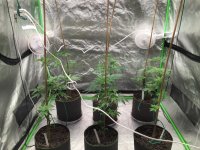
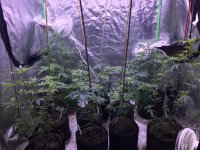
Back after a year and alot has been learned! New lights!

Inuart88

Banned
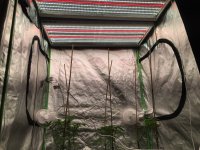
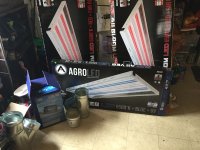
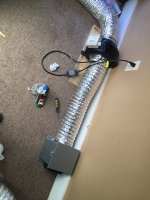
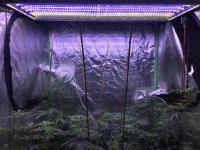
Well i finally went in on new lights after having a miserable summer with the heat from a HPS/MH light. i went with the ArgoLed Sun 411 veg and bloom lights 1 veg 2 bloom. 1500 on lights more than i spent on my whole setup last year. also got new filter ducting filter box and a lot more but it should be a good summer also picking up a portable sealed system portable a/c 10k btu. i have had 6 grows with in this last year some better than others but bud quality was always amazing! =D anyway just wanted to show my new stuff!
 

Attachments

  • photo45653.jpg
    photo45653.jpg
    2.4 MB · Views: 3
  • photo45654.jpg
    photo45654.jpg
    1.5 MB · Views: 3
  • photo45655.jpg
    photo45655.jpg
    1.8 MB · Views: 2
  • photo45656.jpg
    photo45656.jpg
    2.2 MB · Views: 3
  • photo45657.jpg
    photo45657.jpg
    2.3 MB · Views: 3
  • photo45658.jpg
    photo45658.jpg
    2.4 MB · Views: 4
Thank you its about time to upgrade the wife will want to kill me but hey if it saves me a head ache im alright with that
 
Also if you are looking in to led lights one of the more important information on the lights is the PPF. for veg you want 400-600 ppf and for flower between 600-900 ppf those bloom lights land at 414 each so total 828 which is close to the max out. When you hit 1000ppf the plants will not take any more till you add c02.
 
Welcome back, 88!! It seems like we are always "tweeking" our grow spaces followed by a bit of a learning curve with new systems!! Good luck and keep us posted!!!
 
thank you happy to be back and show you guys what i learned over this year and it was alot only way to learn is to make mistakes and i did alot of that. so upgrading my lights and everything in between is fixing the stuff i learned this year and save me some $$ on my electric bill
 
Wahoo you ARE BACK and looking very slick! How big is the tent? So wonderfully fresh. Delighted for you😊😊😊😊😊
 
4x4x7s got 2 one veg and flower. Upgrading from a 600watt hps/mh never felt SO GOOOOOD! got some new strains too Firstblood, Sly Pie Exress and Dr.fire which is a cross seed i made =D so those 3 new kinds are exciting been stuck on C99 Fire OG Jack and Mystery White for a long time so im excited to get some new stuff coming in also. Didn't you upgrade to leds? did you like them? The agro suns have only been out since November so i couldn't find shit on em before i bought em but i like what i see.
 
Also if you are looking in to led lights one of the more important information on the lights is the PPF. for veg you want 400-600 ppf and for flower between 600-900 ppf those bloom lights land at 414 each so total 828 which is close to the max out. When you hit 1000ppf the plants will not take any more till you add c02.

Not far off, though there is really no need to change light intensity between full vegetation and flowering. 500-700umols is the best range for photosynthetic efficiency. Between 700-1000umol plants quantum yield or photosynthetic efficiency really starts to decline as they become Co2 limited. Above 1000umols as you say, they have reached the saturation point, where any further light increase does not increase photosynthesis and can actually reduce it if photoinhibition occurs.

If all or most light reaches the plant canopy, light height does not provide more energy to plants. You only change the distribution characteristics as light does not degrade through space, it merely radiates and density reduces with respect to the observer.
 
Yeah i just started learning about this yesterday lol after the company for the lights called me to explain these light stats to me since i used lumens with my old 600watt to judge goodness i guess i dont know its what i learned early on in growing. Now that i have made the switch from the mh/hps learning what makes an led good is different i tried asking guys at grow store and they new shit about leds which was surprising because they have always been well versed but after talking to the company lumens doesn't matter that is the light to the human eye of how bright it is. i was told about the spectrum which i new about but they knew nothing about ppf or how much ppf you would need for ur desired grow space. also using Mylar aka reflective walling increases ppfd by 10-20% . But i got 25% off my order at the grow store i didnt go in there fucking around i said whats the best deal you can give me if i buy 3 of these today and i wanted 20% he said 25% i shut my mouth and his manager railed him a new one. then he tried to get me to buy one today and get the other 2 tomorrow since they didn't have them in-stock i said i will pay for everything now and you order Monday. so i got a light for free =D the reds were 530 before 25% and the blue 460 i got all 3 for 1050 lol and i got some other stuff 2 but the lights is where the deal was
 
Last edited:
Haha nice. Yea light manufacturers are surprisingly working off some inaccurate and poor understanding in light physics and plant physiology. I have seen many many products from light manufacturers with advertising that is so off track that i feel like intellectually vomitting. 😅

Have a look at some of my articles if you want to learn more. 👍
 
Honestly Sunlight supply co. the makers new so much it was insane i was completely surprised when talking to there rep. i asked alot of questions i had about light height and all the other stuff. and got alot of the answers you gave me. i was impressed to say the less. they also emailed me a bunch of materiel pertaining to the light and its specifications and scientific data. now the grow store salesmen couldnt tell his head from his ass but he gave me a hell of a deal
 
Yes I made the change to LEDs a while back. I love them. They still generate some heat by their cooling fans but nowhere the heat issue of HP's. And! My plants like them a lot! Very perky. I still veg under T5s.
Great new set up(S)!!!! Congratulations🍾🍾🎩
 
also one thing i can tell you from my last year of growing air flow and air exchange /HVAC is soooo important its crazy its almost more important than lighting learning things about this subject and how air flow works(think of air as water) and how filtering and cooling/dehumidifying the air is important and a learning curve for someone new to this hobby
 
Yes i have written an article about the importance of environment conditions. You do have to keep in mind of the environemnt control equipment, if its using too much power then there is a point where controlling environment such as temperature can cost more than it is worth.
 
Learned the hard way. I left my exhaust for two days off to test my temps differences and there was mold already forming on my soil the second day . I run it 24/7 now.
 
Yup, thats what I've found too. I adjust the output on the lights I have so they put out the suggested PPFD for various stages of development.
 
A while back I condensed some research I did on PPF/PPFD and will attach it here in case anyone is interested.
I guess I'm technologically inept because I tried to attach a PDF with that info but couldn't get it to take.
Apologies.
So I'm going to just paste it below.

_Photosynthesis is the most important chemical reaction on this planet. Plants use a band of light between 400nm-700nm as a source of energy to make food molecules from CO2 and H20.

The spectrum of light between 400nm-700nm is defined as PAR_Photosynthetic Active Radiation. Light outside this PAR range is not used by plants for growth. Plants do respond to UV and Infrared light but these extreme wavelengths are utilized more as “triggers” that assist or promote various stages of development such as initial growth and the onset of flowering.

The lights I use provide a spectrum of 300-800nm so they account for small amounts of light outside the photosynthetic active radiation spectrum. They also provide a full range of green light which is also used by plants in various growth processes.

Electric light sources convert electrons into photons. Photo-biological reactions measure output with photosynthetic photon flux_ PPF which is a measurement of the total PAR output of a lighting system (basically the amount of specific colors within the range from UV to Infrared_ it isn’t a measurement of the strength of the light reaching your canopy, only the quality of the light).

PPFD measures how much of that light is delivered to a canopy at a specific distance and a specific area of coverage. PPFD is short for photosynthetic photon flux density. This measurement is expressed as micro moles per meter squared per second_umol/m2/s.
This is the only real life measurement that tells us how much light is being delivered to a crop canopy enabling photosynthesis.

Different lights provide variable amounts of PPFD. This is not directly related to the amount of watts a light draws in electrical power, or the strength of individual LED’s.

For instance the lights I'm using are designed to be used at least 18” from the canopy (not any closer). The manufacturer provides charts that provide the PPFD each of their lights provide at specific distances in six inch squares over a one square meter area. For example my two lights together hung 1 ft from each side of the growing area and one foot apart provide 880 PPFD at 22”, 666 PPFD at 26” and 510 PPFD at 30”. At 48” they provide 260 PPFD.

Even coverage over the entire canopy and depth of penetration are what really count when determining the sweet spot for your light(s).

I start using my lights at a height that is close to what PPFD is recommended for specific stages and then lower them a bit at a time so I can match the ideal PPFD. The last three weeks of flowering they are about 20-22” above the canopy. With short plants, less than 20” tall there isn’t much difference between the size of the colas between the top and bottom because almost the entire plant is within the sweet spot.

For instance when setup 26” above the canopy they provide 666 PPDF over every square inch_ from one side to the other and end to end (no fall off).
The same setup provides 400 PPFD at 36”. With this information it can be determined that these lights when hung 26” above the canopy will provide 666 PPFD at the canopy and still deliver 400 PPFD 14” below the canopy. This is important to know when trying to determine the best height for your lights at specific stages of development and the sweet spot relative to the depth of penetration.During the last 3-4 weeks of flowering I lower them to about 20”, giving the plants about 700-800 umols/m2/s.

CANNABIS does best with 100-300 umol/m2/s during the seedling stage.
300-600 umol/m2/s during the vegetation stage,
and 600-900 umol/m2/s during flowering.

Generally the more light you can provide the more photosynthetic activity will result. But at some point a plants response to the amount of light it is receiving will plateau at saturation level. The saturation level can vary depending on the environmental conditions of the grow room.
When light saturation has reached its limit this can be due to some environmental factor, such as CO2 levels. When temperatures reach over 80 degrees additional CO2 can increase the saturation level, making it possible to obtain higher production at that temperature range.

I don’t have room for a mechanical CO2 generator, so I just try to get as good an air exchange as I can. I have tried products other than CO2 generators but haven’t known them to make a noticeable difference. Considering the environmental conditions in my grow room I may not even benefit from supplementing CO2 because I keep the temp below 80 degrees F.

Of course even the best lighting will not guarantee awesome harvests. There are many other environmental conditions for getting the most from your crop_ medium, nutrients, PH, temperature, relative humidity, photoperiod, etc.

Cheers to all and get growing!

 
The spectrum of light between 400nm-700nm is defined as PAR_Photosynthetic Active Radiation. Light outside this PAR range is not used by plants for growth. Plants do respond to UV and Infrared light but these extreme wavelengths are utilized more as “triggers” that assist or promote various stages of development such as initial growth and the onset of flowering.

Plants do photosynthesize outside the PAR spectrum, though less efficiently than inside PAR. Both infrared and ultraliolet
are used for photosynthesis and morphological responses to light.

PPFD measures how much of that light is delivered to a canopy at a specific distance and a specific area of coverage. PPFD is short for photosynthetic photon flux density. This measurement is expressed as micro moles per meter squared per second_umol/m2/s.
This is the only real life measurement that tells us how much light is being delivered to a crop canopy enabling photosynthesis.

Whats interesting here is that PPFD is not actually measuring in metres squared for electrical lighting and does not represent an actual value of photons reaching the sensor. Ever wondered why you can measure higher PPFD than the total PPF of the fixture you are measuring ?. This is why. Quantum metres were designed for solar radiation and demand uniform light to accurately calculate a metres squared value. But we use it as a spot reference for the diameter of the sensor rather than a technically accurate metric.


CANNABIS does best with 100-300 umol/m2/s during the seedling stage.
300-600 umol/m2/s during the vegetation stage,
and 600-900 umol/m2/s during flowering.
Plants actually are most efficient between 500-700umols. Between 700-1000umols photosynthetic efficiency really starts to drop. With anything over 1000umols not adding anything to photosynthesis except heat. Although younger plants do benefit from less light intensity, there really is no need to change the light height between vegetation and flowering. Its best to stay between 500-700umols for optimal efficiency.

Light height again does not provide more energy to plants where the entire canopy is filled.

For the most part your understanding is pretty good, you might benefit reading my articles on light. Keep learning :)
 
Back
Top