
GrowWeedEasy.com
You are using an out of date browser. It may not display this or other websites correctly.
You should upgrade or use an alternative browser.
You should upgrade or use an alternative browser.
HELP! Trichomes
- Thread starter Bigpapa
- Start date


DrPhoton
New member
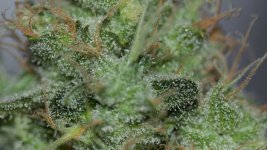
Thats a nice high quality image you have there, i was able to zoom right in. How long in flower has it been ? It does not look far away yet, no signs of any amber. Trichomes look cloudy but could possibly develop some more. Overall its a nice looking girl.
Using visual cues of trichomes for the most part works great, but as per previous discussion not all aspects are equal. Amber development is typically used as an indicator. But sometimes amber develops really late, so late infact that many people have reported the non existance of amber with particular strains. So you must also use other aspects such as flowering time and floral characteristics to calculate the best time to harvest.
Using visual cues of trichomes for the most part works great, but as per previous discussion not all aspects are equal. Amber development is typically used as an indicator. But sometimes amber develops really late, so late infact that many people have reported the non existance of amber with particular strains. So you must also use other aspects such as flowering time and floral characteristics to calculate the best time to harvest.
DrPhoton
New member
Northen lights is mostly indica which is likely why the recomended harvest window is between 7-9 weeks. Amber is really not sought after with indica based strains. That strain would likely develop amber around 10-12 weeks or even longer. A quick online search shows several people reporting that northen lights is difficult to present amber with. Based on your duration of flower, floral characteristics and trichome condition. I would put the ideal harvest at around end of week 9 or even mid week 10.
Hopefully others who have experience with northen lights will chime in
Hopefully others who have experience with northen lights will chime in


9fingerleafs
Well-known member
i agree with you guys, not all the strains are the same, this 8 week flowering indica looked kinda "amber" the whole time
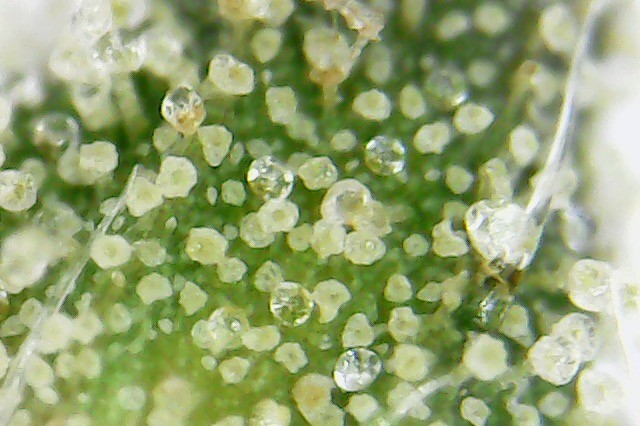
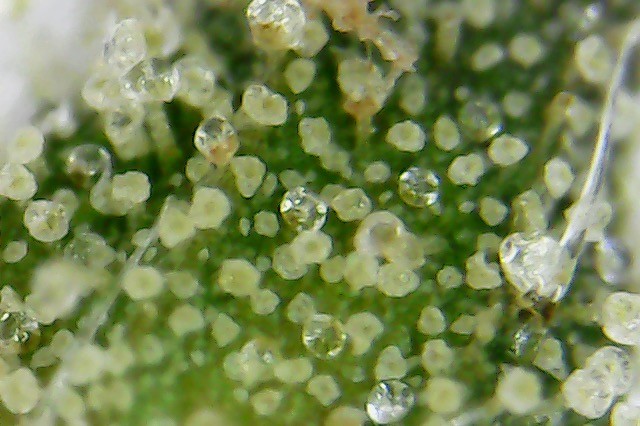
there are only clear and light amber.. but no cloudy, this green crack instead
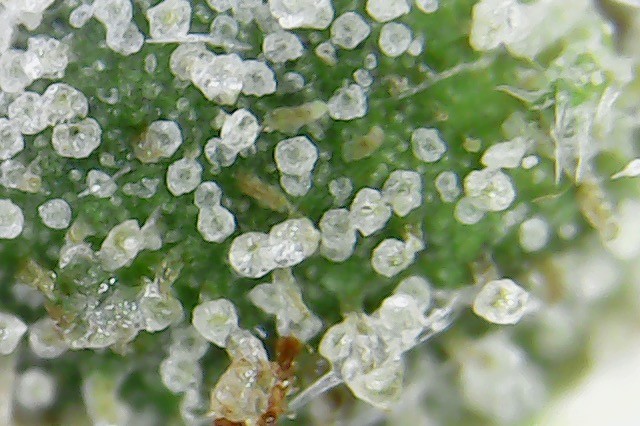
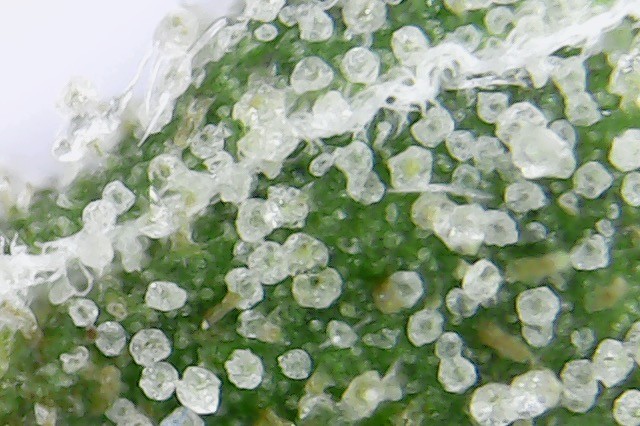
all cloudy and no amber...
my conclusion is all trichomes degrade by oxidizing and turn amber eventualy thus converting THC into CBN...
but im sure depending on the cannabinoid ratio of each individual strain some are full with THC when ripe (all cloudy) and some other have lots of CBN and CBD (lots of amber) when ripe
there are only clear and light amber.. but no cloudy, this green crack instead
all cloudy and no amber...
my conclusion is all trichomes degrade by oxidizing and turn amber eventualy thus converting THC into CBN...
but im sure depending on the cannabinoid ratio of each individual strain some are full with THC when ripe (all cloudy) and some other have lots of CBN and CBD (lots of amber) when ripe
DrPhoton
New member
Whats interesting is that THC is not at its peak when cloudy but when its actually clear. I talk a little bit about that here.
As to why some develop amber later than others, i cannot exactly say. I could only guess the degradation of THC into CBN is just different in strains. CBD is not related to the amber effects and or is not a degradation. CBD and in fact all cannabinoids are manufactured in the trichome from precurser chemicals.
As to why some develop amber later than others, i cannot exactly say. I could only guess the degradation of THC into CBN is just different in strains. CBD is not related to the amber effects and or is not a degradation. CBD and in fact all cannabinoids are manufactured in the trichome from precurser chemicals.

DrPhoton
New member
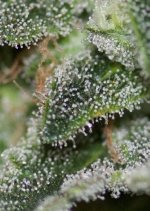
I even see a few amber there too. I remember mentioning to you how different loupes can change the appearance and color of the trichomes. This is a good example, although the scope is unchanged. How its used can have an effect too. Unless it was taken from a different part of the plant which could also explain the differences.
Based on that anyway, it would appear pretty close. I probably wouldnt let it go any longer than another week, if that. Your in the golden zone. You could chop today if you wanted. Keep checking around to see if you can reproduce these in other parts of the plant.
Based on that anyway, it would appear pretty close. I probably wouldnt let it go any longer than another week, if that. Your in the golden zone. You could chop today if you wanted. Keep checking around to see if you can reproduce these in other parts of the plant.
Last edited:

alltatup
New member
http://growhappyplants.com/look.html
I found thIs article to be very helpful on the correlation between strain and trichome color.
I found thIs article to be very helpful on the correlation between strain and trichome color.

D.A.A.S.69
New member
I grown an awful lot of plants, in my life, every one I've ever grown has had some amber in them. One out of a thousand might not show amber, but the other 999 will.

starramus
New member
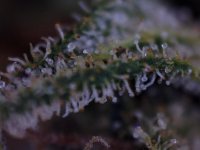
Bigpapa since you are growing an Indica is a sedating effect what you are looking for? My wife likes a good couch lock effect so I postponed harvest on some Blue God per her request. I didn't harvest until I had plenty of amber. I may have overdone it a bit. It kinda depends on what you are looking for.
Attachments
DrPhoton
New member
alltatup
Firstly thank you for providing this, although i disagree with the article as you will read. There was much viable information from the papers cited there. I am much grateful for that.
I believe the writer misinterpreted data from the papers he cited and did not completely or thoroughly read them. Although for a breif moment i thought the guy was on to something, but ended up confused by the end. Until i read the three cited articles and papers, all became clear.
The main points of his confusion i believe are in the difference between stored degradation and biosynthesis degradation (living plant). Although he makes some great points about the transition from clear to opaque which i was always wondering about.
He cites a paper done on stored cannabis and the indication of age by analyzing cannabis samples. These results provided a relationship profile of the concentration ratio between THC to CBN and storage time to provide approximate age of a STORED cannabis sample.
He used this to prove to himself, plus his questionable test results that THC does not significantly degrade and that the transition of THC to CBN was not a complete conversion. Or perhaps not even happening. Basically concluding that amber is not a negative quality. At least thats what i could conclude from his somewhat confusing writing.
However what he failed to understand was that the paper was about STORED cannabis and not biosynthetically active (living plant) cannabis. And also his interpretation of THC to CBN was wrong, there was a complete identifiable measurement from THC to CBN. This 'ratio' is what allows the method of aging to work in the first place. As the THC needs a reference in order to work. As the original THC level is unknown, CBN is used as the reference due to it being the converted chemical. Although some amount is not directly converted to CBN, this was merely pointed out as to adjust for error in the calculation. Thats it.
The other paper he cited was basically about the anatomy & physiology of THC in the trichome. Quite fascinating paper really. Bascially one part of the paper detailed the aging of trichomes and the relationship of its color to its cannabinoid profile. What they found was that as the trichome aged from mature to aged and then to senescence. There was a clear distinction between them with the cannabinoids.
This paper alone made clear points about the transition of age and color and its effects on cannabinoid levels. He further cites Mel. Frank who also cites papers saying very similar conclusions.
Here Mel Frank cites
"In marijuana, the more color that the gland heads developed, the less THC they contained, and in the case of hemp, the less CBD. In both cases, color indicated a loss of THC or CBD—and the deeper the color, the more serious the loss, since pure THC is transparent."
He continues talking about the conversion of THC to CBN
"Keep in mind that while THC and CBD are both produced by the plant, CBN is not; it is the oxidative degradation product of THC. In other words, THC exposed to oxygen (air) degrades to CBN and the higher the temperature, the faster the degradation."
And here he talks about the relationship of the color to THC degradation.
"In fact, the color change reflects the aging of the gland contents, and the color itself most likely comes from the polymerization of essential oils in the gland heads; these essential oils give marijuana varieties their distinctive fragrance and taste. The color change may indirectly indicate that THC is changing to CBN"
One thing that he does seem to be correct on is the transition of the trichome from clear to cloudy. Which he quotes as..
"Transparent resins, regardless of color, are a sign that the plant is actively carrying out resin biosynthesis. When biosynthesis ceases, resins turn opaque as cannabinoid and aromatic levels decline."
Basically what this means is that THC is highest when trichomes are clear and opaque is an indication of the decline in manufacturing of these cannabinoids. There is much more i dissected from the article but this is the most important from it.
Basically i would ignore what was written and understand these important points.
THC most definitely converts into CBN.
Color shifting has been shown as the degradation of cannabinoids, as pure THC is clear.
Color shifting appears to highlight the transition of THC to CBN in studies, as such using it as a indicator in maturity is possible.
Opaque or clowdy resin is a indication of the downregulation of cannabinoid manufacturing, particularly THC.
I will be using this information to rewrite my original article on trichomes which will be a while yet before its published. Much thanks again Alltatup.
Firstly thank you for providing this, although i disagree with the article as you will read. There was much viable information from the papers cited there. I am much grateful for that.
I believe the writer misinterpreted data from the papers he cited and did not completely or thoroughly read them. Although for a breif moment i thought the guy was on to something, but ended up confused by the end. Until i read the three cited articles and papers, all became clear.
The main points of his confusion i believe are in the difference between stored degradation and biosynthesis degradation (living plant). Although he makes some great points about the transition from clear to opaque which i was always wondering about.
He cites a paper done on stored cannabis and the indication of age by analyzing cannabis samples. These results provided a relationship profile of the concentration ratio between THC to CBN and storage time to provide approximate age of a STORED cannabis sample.
He used this to prove to himself, plus his questionable test results that THC does not significantly degrade and that the transition of THC to CBN was not a complete conversion. Or perhaps not even happening. Basically concluding that amber is not a negative quality. At least thats what i could conclude from his somewhat confusing writing.
However what he failed to understand was that the paper was about STORED cannabis and not biosynthetically active (living plant) cannabis. And also his interpretation of THC to CBN was wrong, there was a complete identifiable measurement from THC to CBN. This 'ratio' is what allows the method of aging to work in the first place. As the THC needs a reference in order to work. As the original THC level is unknown, CBN is used as the reference due to it being the converted chemical. Although some amount is not directly converted to CBN, this was merely pointed out as to adjust for error in the calculation. Thats it.
The other paper he cited was basically about the anatomy & physiology of THC in the trichome. Quite fascinating paper really. Bascially one part of the paper detailed the aging of trichomes and the relationship of its color to its cannabinoid profile. What they found was that as the trichome aged from mature to aged and then to senescence. There was a clear distinction between them with the cannabinoids.
This paper alone made clear points about the transition of age and color and its effects on cannabinoid levels. He further cites Mel. Frank who also cites papers saying very similar conclusions.
Here Mel Frank cites
"In marijuana, the more color that the gland heads developed, the less THC they contained, and in the case of hemp, the less CBD. In both cases, color indicated a loss of THC or CBD—and the deeper the color, the more serious the loss, since pure THC is transparent."
He continues talking about the conversion of THC to CBN
"Keep in mind that while THC and CBD are both produced by the plant, CBN is not; it is the oxidative degradation product of THC. In other words, THC exposed to oxygen (air) degrades to CBN and the higher the temperature, the faster the degradation."
And here he talks about the relationship of the color to THC degradation.
"In fact, the color change reflects the aging of the gland contents, and the color itself most likely comes from the polymerization of essential oils in the gland heads; these essential oils give marijuana varieties their distinctive fragrance and taste. The color change may indirectly indicate that THC is changing to CBN"
One thing that he does seem to be correct on is the transition of the trichome from clear to cloudy. Which he quotes as..
"Transparent resins, regardless of color, are a sign that the plant is actively carrying out resin biosynthesis. When biosynthesis ceases, resins turn opaque as cannabinoid and aromatic levels decline."
Basically what this means is that THC is highest when trichomes are clear and opaque is an indication of the decline in manufacturing of these cannabinoids. There is much more i dissected from the article but this is the most important from it.
Basically i would ignore what was written and understand these important points.
THC most definitely converts into CBN.
Color shifting has been shown as the degradation of cannabinoids, as pure THC is clear.
Color shifting appears to highlight the transition of THC to CBN in studies, as such using it as a indicator in maturity is possible.
Opaque or clowdy resin is a indication of the downregulation of cannabinoid manufacturing, particularly THC.
I will be using this information to rewrite my original article on trichomes which will be a while yet before its published. Much thanks again Alltatup.
Last edited:
DrPhoton
New member
No not exactly, although THC is highest when trichomes are clear. Other cannabinoids are not as developed. As such the characteristic high is different. I detailed this in another thread i cited earlier.
Whats also interesting is that the peak level of THC is actually when the trichome bulb has fully developed and is transluscent. But many of the other cannabinoids are not as fully developed and so the reason why waiting for the trichs to go cloudy is preferred.
Transluscent trichomes gives peak THC but low CBN and CBD. This provides the stimulating, clear, speedy high thats commonly associated with early harvest.Â
Cloudy trichomes have a lower THC but other cannibinoids are now developing more. This gives the more comfortable and balanced high, an overall contributing effect.
Amber trichomes are a result of THC oxidizing into CBN. This has been subjected as the "fake" version of CBD and provides less desired effects in comparison. Which is why it is mostly not preferred.
Whats also interesting is that wether you have mostly indica or sativa, might affect when you should harvest. With indica it would likely be more ideal to harvest before any amber developes and trichomes are cloudy. With sativa you would want to wait a little longer when amber does develop.Â
starramus
New member
My next grow I will do the progressive testing i described. I have never before harvested with clear trichomes. I myself prefer a "stimulating, clear speedy high". I prefer a Super Silver Haze high over say a Jack Herer buzz even though it might be the more "comfortabe". Excellent informative article that i must test for myself in the real world. I am sure it has been done many times before.