Ckbrew The short answer is Enzymes. But here is a good read on them.
Enzymes and Functions
by Jim Bennett June 11, 2020
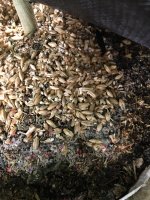
This is a very partial list of the enzymes found in malted grains - less than 3% of the total count actually.
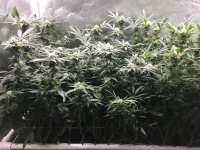
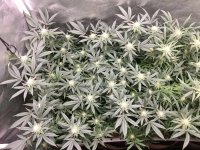
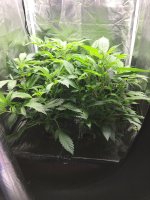
This subset that I selected have a direct impact when we apply them to our garden soils and equally important when added to our vermiculture process.
In the vermiculture discussion, these specific enzymes accelerate the reproduction of our worm colonies and as well as reducing the time required to turn our agricultural wastes into humus.
Amylase (/ˈæmɪleɪz/) is an enzyme that catalyses the hydrolysis of starch (Latin amylum) into sugars. Amylase is present in the saliva of humans and some other mammals, where it begins the chemical process of digestion. Foods that contain large amounts of starch but little sugar, such as rice and potatoes, may acquire a slightly sweet taste as they are chewed because amylase degrades some of their starch into sugar. The pancreas and salivary gland make amylase (alpha amylase) to hydrolyse dietary starch into disaccharides and trisaccharides which are converted by other enzymes to glucose to supply the body with energy. Plants and some bacteria also produce amylase. Specific amylase proteins are designated by different Greek letters. All amylases are glycoside hydrolases and act on α-1,4-glycosidic bonds.
Arylsulfatase catalyzes the desulfation of 3-O-sulfogalactosyl residues in glycosphingolipids. The enzyme activity requires the presence of saposin B as an activator. The ARSA gene maps to chromosome 22 at the end terminus and encodes a 507-amino-acid precursor protein that undergoes post-translational processing. In addition to N-linked glycosylation required for lysosomal sorting through the mannose-6 phosphate receptor pathway, there is a unique oxidation that occurs for eukaryotic sulfatases. In human arylsulfatase A, a formylglycine residue is found in place of cysteine 69 and is due to the oxidation of a thiol group to an aldehyde. In addition to sulfatide, arylsulfatase A will cleave sulfate groups from other naturally occurring glycosphingolipids including lactosylceramide-3-sulfate and psychosine sulfate.
Beta-glucosidase is an enzyme that catalyzes the hydrolysis of the glycosidic bonds to terminal non-reducing residues in beta-D-glucosides and oligosaccharides, with release of glucose.[2]
Synonyms, derivatives, and related enzymes include gentiobiase, cellobiase, emulsin,elaterase, aryl-beta-glucosidase, beta-D-glucosidase, beta-glucoside glucohydrolase, arbutinase, amygdalinase, p-nitrophenyl beta-glucosidase, primeverosidase, amygdalase, linamarase, salicilinase, and beta-1,6-glucosidase.
Cellulose is an organic compound, a polysaccharide consisting of a linear chain of several hundred to many thousands of β(1→4) linked D-glucose units.Cellulose is an important structural component of the primary cell wall of green plants, many forms of algae and the oomycetes. Some species of bacteria secrete it to form biofilms.
Cellulose is the most abundant organic polymer on Earth. The cellulose content of cotton fiber is 90%, that of wood is 40–50%, and that of dried hemp is approximately 57%.
Chitinases (chitodextrinase, 1,4-beta-poly-N-acetylglucosaminidase, poly-beta-glucosaminidase, beta-1,4-poly-N-acetyl glucosamidinase, poly[1,4-(N-acetyl-beta-D-glucosaminide)] glycanohydrolase, (1->4)-2-acetamido-2-deoxy-beta-D-glucan glycanohydrolase) are hydrolytic enzymes that break down glycosidic bonds in chitin.[1]
As chitin is a component of the cell walls of fungi and exoskeletal elements of some animals (including mollusks and arthropods), chitinases are generally found in organisms that either need to reshape their own chitin[2] or dissolve and digest the chitin of fungi or animals.
Dehydrogenase (also called DH or DHase in the literature) is an enzyme belonging to the group of oxidoreductases that oxidizes a substrate by reducing an electron acceptor, usually NAD+/NADP+ or a flavin coenzyme such as FAD or FMN.
They also catalyze the reverse reaction, for instance alcohol dehydrogenase not only oxidizes ethanol to acetaldehyde in animals but also produces ethanol from acetaldehyde in yeast.
Phosphatase is an enzyme that uses water to cleave a phosphoric acid monoester into a phosphate ion and an alcohol. Because a phosphatase enzyme catalyzes the hydrolysis of its substrate, it is a subcategory of hydrolases.
Phosphatase enzymes are essential to many biological functions, because phosphorylation (e.g. by protein kinases) and dephosphorylation (by phosphatases) serve diverse roles in cellular regulation and signaling. Whereas phosphatases remove phosphate groups from molecules, kinases catalyze the transfer of phosphate groups to molecules from ATP. Together, kinases and phosphatases direct a form of post-translational modification that is essential to the cell's regulatory network.
Phosphatase enzymes are not to be confused with phosphorylase enzymes, which catalyze the transfer of a phosphate group from hydrogen phosphate to an acceptor. Due to their prevalence in cellular regulation, phosphatases are an area of interest for pharmaceutical research.
Protease (also called a peptidase or proteinase) is an enzyme that catalyzes (increases the rate of) proteolysis, the breakdown of proteins into smaller polypeptides or single amino acids.
They do this by cleaving the peptide bonds within proteins by hydrolysis, a reaction where water breaks bonds. Proteases are involved in many biological functions, including digestion of ingested proteins, protein catabolism (breakdown of old proteins),and cell signalling.
Without additional helping mechanisms, proteolysis would be very slow, taking hundreds of years. Proteases can be found in all forms of life and viruses. They have independently evolved multiple times, and different classes of protease can perform the same reaction by completely different catalytic mechanisms.
Ureases (EC 3.5.1.5), functionally, belong to the superfamily of amidohydrolases and phosphotriesterases.[2] Ureases are found in numerous bacteria, fungi, algae, plants, and some invertebrates, as well as in soils, as a soil enzyme. They are nickel-containing metalloenzymes of high molecular weight.[3]
These enzymes catalyze the hydrolysis of urea into carbon dioxide and ammonia:
(NH2)2CO + H2O → CO2 + 2NH3
The hydrolysis of urea occurs in two stages. In the first stage, ammonia and carbamate are produced. The carbamate spontaneously and rapidly hydrolyzes to ammonia and carbonic acid. Urease activity increases the pH of its environment as ammonia is produced, which is basic.