
GrowWeedEasy.com
You are using an out of date browser. It may not display this or other websites correctly.
You should upgrade or use an alternative browser.
You should upgrade or use an alternative browser.
Growing Finicky Sativas - A Quick Guide to Growing Sativa Strains
- Thread starter NebulaHaze
- Start date
-
- Tags
- indica plant care sativa strain


I can't wait to apply this when I get my Zamaldelica
I want to try some of that! Make sure you @mention me on your grow journal so I can follow along!

alltatup
New member
I found the principle articles I got my information from: it's actually a two-part article from Buds Magazine, written by Nigel Salazar. Here is part one, with a link to part 2:
http://bigbudsmag.com/marijuana-sativa-indica-kush-growing/
NebulaHaze What does he mean when he refers to "harsh compounds and weak pH buffers"? I would really like to understand why he dismisses the nute lines he mentions.
http://bigbudsmag.com/marijuana-sativa-indica-kush-growing/
NebulaHaze What does he mean when he refers to "harsh compounds and weak pH buffers"? I would really like to understand why he dismisses the nute lines he mentions.

DingusKhan
New member
Thanks for sharing that Tat. Good read, but I got a little lost in all those different products too. I got more from yours and Nebulas posts. And all authors have very cool names. I love multi-ethic names, like the author Nigel Salazar,or Alberto Fujimori, Shaquille O'Neil, and korean tacos.
It's funny he mentions TGA, I'm in the process of harvesting Dairy Queen, described as a 60% Sativa dominant. It was extremely easy to grow, is a nice, fat bush that looks like the indicas other people are sharing here. 2 month veg, then it hardly doubled in height during flower, only getting to about 18 inches.
It's funny he mentions TGA, I'm in the process of harvesting Dairy Queen, described as a 60% Sativa dominant. It was extremely easy to grow, is a nice, fat bush that looks like the indicas other people are sharing here. 2 month veg, then it hardly doubled in height during flower, only getting to about 18 inches.
DingusKhan
New member
How about topping? Manifolding? FIMing? What about growing outdoors?
There's lots of great information in that article but I'm not sure what he means by waiting until 20% resin glands starts to fall apart! I'd love to hear more on that
As far as nutrients, it seems like maybe the author doesn't approve of mineral based nutrients. Mineral nutrients are very easy to absorb by the plant, but they don't come from living sources. The author may prefers organic sources of nutrients (things like guano, kelp, compost, etc.).
That's a relatively common belief among organic growers though I personally disagree with it Organic growing has its own benefits but you just can't deny that you can produce incredible results with mineral nutrients! Hydroponic weed costs more for a reason! General Hydroponics and Botanicare are some of the best nutrients! But everyone has their own opinion There's as many opinions about growing as there are growers!
As far as nutrients, it seems like maybe the author doesn't approve of mineral based nutrients. Mineral nutrients are very easy to absorb by the plant, but they don't come from living sources. The author may prefers organic sources of nutrients (things like guano, kelp, compost, etc.).
That's a relatively common belief among organic growers though I personally disagree with it
Organic growing has its own benefits but you just can't deny that you can produce incredible results with mineral nutrients! Hydroponic weed costs more for a reason! General Hydroponics and Botanicare are some of the best nutrients! But everyone has their own opinion There's as many opinions about growing as there are growers!
alltatup
New member
NebulaHaze It sounds to me like it's not really fair for organic proponents to nay say mineral-based nutes just on that basis. So you don't really see a basis for talking about harshness and weak pH buffers--or does it simply mean that you have to check the pH on a regular basis?
I really don't like it when some products are dismissed without concrete scientific reasons, so if there is no reason to talk about "harsh buffers," then can we assume that they are just trying to promote their preferred brand, but there's no real substance to the argument? Yes I respect everyone's opinion, I can't respect deception or distortion of facts... So I'm still a bit confounded. Sounds to me like you are diplomatically saying, 6 of organic, half a dozen of mineral-based--no real difference.
I really don't like it when some products are dismissed without concrete scientific reasons, so if there is no reason to talk about "harsh buffers," then can we assume that they are just trying to promote their preferred brand, but there's no real substance to the argument? Yes I respect everyone's opinion, I can't respect deception or distortion of facts... So I'm still a bit confounded. Sounds to me like you are diplomatically saying, 6 of organic, half a dozen of mineral-based--no real difference.
When he says mineral nutrients are harsh, I assume he's referring to the fact that the plant will absorb them no matter what. They're provided in the most easily accessible form, and get up taken by the plant almost instantly at the roots. This is great when you're giving the right amount of nutrients, but can easily burn your plant and give it nutrient burn if you give too high levels of nutrients.
On the flip side, with organic sources the plant needs to break down the nutrients in order to be able to absorb them. As a result plants are less likely to get burned even if you give them way too much nutrients, but it also means the plant grows a little slower because it has to do more "work" to get the same amount of nutrients. So there are pros and cons!
When he talks about weak pH buffers I think he's talking about "chelated" nutrients. Heavy metals like iron, zinc, copper, manganese, calcium and magnesium can all be chelated. This makes them easier to absorb by the plant. It makes it so your plant can access those nutrients through to roots better even if the pH is off a little.
If you're interested in the science... The heavy metal nutrient ion gets encircled by a "ligand" or "chelator" which is a larger organic molecule. This "coating" protects the nutrient from degradation, and gives it a shape that is less affected by pH and easily absorbed by the roots.
The word chelate is derived from the Greek word chelé, which refers to a lobster's claw. It refers to the pincer-like manner in which a metal nutrient ion is encircled by the larger organic molecule (the claw).
Anyways, you'd think organic growers would like it because you're basically adding organic molecules to make mineral nutrients even better, but I think they just don't like the fact that it involves chemical processes instead of ones that happen in the wild in the soil. I also think a lot of times people tend to dislike what they don't fully understand, especially if they feel in their heart that they already have the best way!
On the flip side, with organic sources the plant needs to break down the nutrients in order to be able to absorb them. As a result plants are less likely to get burned even if you give them way too much nutrients, but it also means the plant grows a little slower because it has to do more "work" to get the same amount of nutrients. So there are pros and cons!
When he talks about weak pH buffers I think he's talking about "chelated" nutrients. Heavy metals like iron, zinc, copper, manganese, calcium and magnesium can all be chelated. This makes them easier to absorb by the plant. It makes it so your plant can access those nutrients through to roots better even if the pH is off a little.
If you're interested in the science... The heavy metal nutrient ion gets encircled by a "ligand" or "chelator" which is a larger organic molecule. This "coating" protects the nutrient from degradation, and gives it a shape that is less affected by pH and easily absorbed by the roots.
The word chelate is derived from the Greek word chelé, which refers to a lobster's claw. It refers to the pincer-like manner in which a metal nutrient ion is encircled by the larger organic molecule (the claw).
Anyways, you'd think organic growers would like it because you're basically adding organic molecules to make mineral nutrients even better, but I think they just don't like the fact that it involves chemical processes instead of ones that happen in the wild in the soil. I also think a lot of times people tend to dislike what they don't fully understand, especially if they feel in their heart that they already have the best way!
alltatup
New member
Thanks for all that information: I understand a bit better now and I realize that I have to do some serious reading in order to understand the science of cannabis nutrition.
I read this article on Big Buds and found it quite disturbing about dangerous additives in some nutrients:
http://bigbudsmag.com/are-the-bigge...br-em-endangering-em-marijuana-growers-users/
It makes me feel even more cynical about weed turning into big business. I feel like I will never know who is lying and who's telling the truth (present company excluded) about what's in nutes, which are good and which are dangerous to use. Like Jorge Cervantes's famous video of rinsing mildewed buds in H2O2 and water. We had a huge discussion here about it (I'm sure you remember), and from what the experts here said, I was convinced that rinsing buds wouldn't get rid of all the mildew.
I read this article on Big Buds and found it quite disturbing about dangerous additives in some nutrients:
http://bigbudsmag.com/are-the-bigge...br-em-endangering-em-marijuana-growers-users/
It makes me feel even more cynical about weed turning into big business. I feel like I will never know who is lying and who's telling the truth (present company excluded) about what's in nutes, which are good and which are dangerous to use. Like Jorge Cervantes's famous video of rinsing mildewed buds in H2O2 and water. We had a huge discussion here about it (I'm sure you remember), and from what the experts here said, I was convinced that rinsing buds wouldn't get rid of all the mildew.
I read that article and I did some research. Definitely some serious stuff! There are a few natural PGRs that are okay for cannabis and organic growing, like the naturally occurring gibberellin which would be found inside the plant anyway. However, it appears that in many places, nutrients or supplements with *synthetic* PGRs are required to label their products as "For Ornamental Use Only."
Each PGR is designed for different applications, and some supposedly can make cannabis plants grow better, be more resistant to bugs and produce harder buds. Some growers use them for those reasons, but there's some worry about its effects on humans so at least in the state of California, synthetic PGRs cannot used in nutrients for plants meant for human consumption.
I can definitely understand how scary it is to think of something bad going into your weed! It's definitely important to pay attention and understand what's actually in each supplement, not just for safety, but also to avoid snake oil products! I really believe in the KISS method (Keep It Simple, Stupid) for growing, and you can produce AMAZING buds using just base nutrients without any supplements whatsoever!
Each PGR is designed for different applications, and some supposedly can make cannabis plants grow better, be more resistant to bugs and produce harder buds. Some growers use them for those reasons, but there's some worry about its effects on humans so at least in the state of California, synthetic PGRs cannot used in nutrients for plants meant for human consumption.
I can definitely understand how scary it is to think of something bad going into your weed! It's definitely important to pay attention and understand what's actually in each supplement, not just for safety, but also to avoid snake oil products! I really believe in the KISS method (Keep It Simple, Stupid) for growing, and you can produce AMAZING buds using just base nutrients without any supplements whatsoever!
alltatup
New member
True dat!! I purchased the AN nutes because the buddy who grew this strain in a larger grow box than I have--1 plant, mind you--produced OVER A POUND of curing bud--sativa bud, which can be so much lighter after drying--using the AN nutes. I've been trying to follow his feeding schedule, etc.--he manifolded and I just LST'd so I could switch to 12/12 sooner.
I so respect your chemical knowledge!! (not to mention the Greek and Latin!!! ;-}
I so respect your chemical knowledge!! (not to mention the Greek and Latin!!! ;-}

SoOrbudgal
Well-known member
I know this is old post but all true what is being said I've experienced a huge sativa Jack Herer and it was a 3 day affair of trimming, almost got cramps in my hands LOL but it can be done I was outdoor grow and the grow was nearly effortless. I never weigh my grows I go by jars and had nearly a pound off one plant.
Spidermite
New member
Wow one day I'll figure some of this out.

oldjarhead100
New member
haha ATU you made me look it up but I only put it on my wish list lol
DrWeedThum
New member
Growing & Caring for Sativa Strains
When it comes to growing cannabis indoors, Sativa plants are typically a little tougher to care for than Indica plants. Sativa strains originated from hot regions near the equator, and as a result they have a few properties that can catch an indoor grower by surprise.
Note: It is very rare to find a "pure" Sativa strain since nearly all marijuana strains available today are some sort of hybrid. The following is talking about strains with a lot of Sativa plants in their ancestry and as a result carry a lot of common Sativa characteristics!
Appearance of Sativa Plants
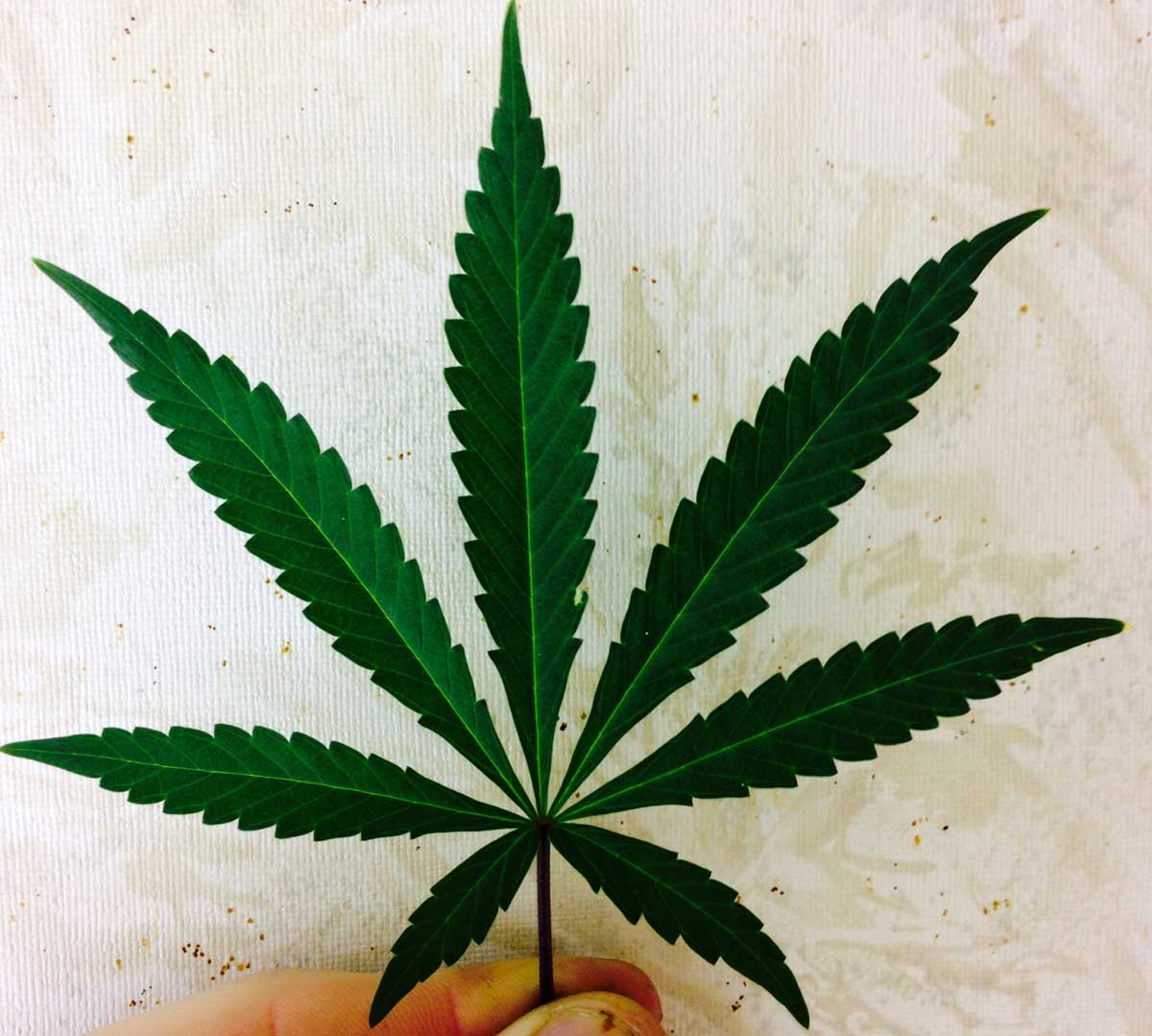
- Often have long, skinny leaves
- Generally stretchy appearance with lots of side branching and plenty of space between sets of leaves (as opposed to the the short, squat Christmas tree shape of an Indica plant).
- Tend to grow tall and fast throughout their life, but may double or even triple in height after entering the flowering stage.
- Their size can quickly get out of control in a small grow space, though an experienced grower may be able to use the fast growth to their advantage!
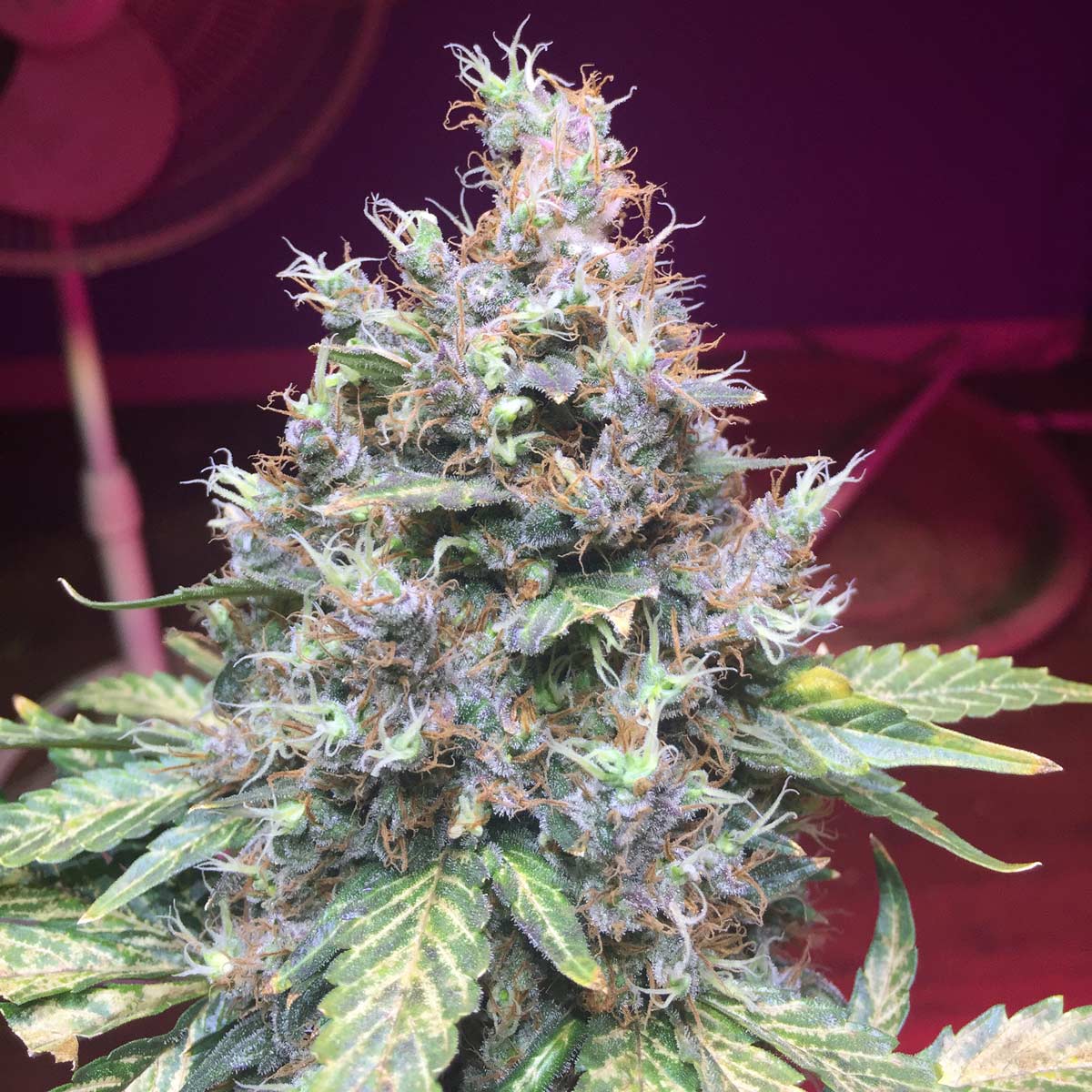
- Buds often have "foxtails" and may be loose or airy compared to Indica buds, which tend to be solid and dense.
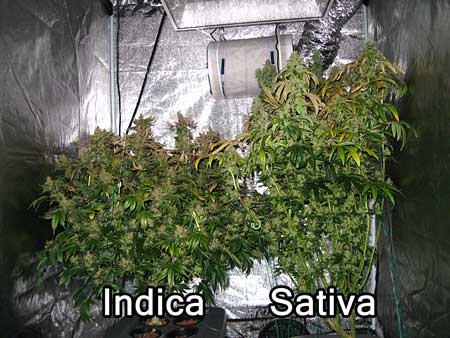
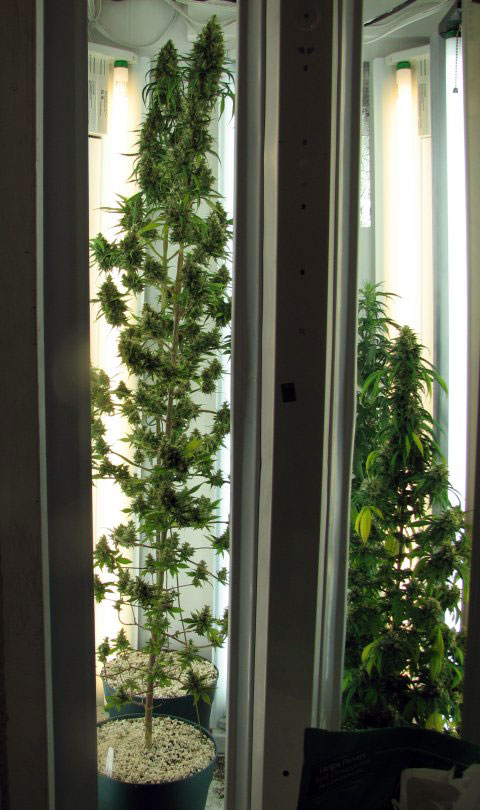
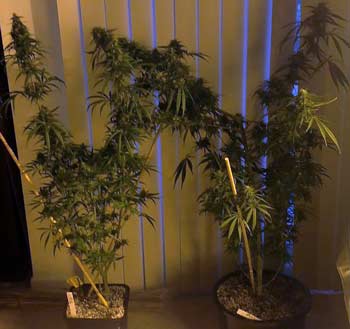
Typical Indica vs Sativa plant - grown indoors together under the same conditions
From seed to harvest, these plants were given an equal amount of light from the sides. The Indica plant stayed short while the Sativa plant on the left grew far taller in the same conditions and time.
Long, thin "fingers" on leaves, compared to Indica leaves which tend to be round and fat.
Buds often have "foxtails" (buds grow in little towers) and/or may be relatively "wild" looking
This is what the buds of a "true" landrace Sativa looks like - basically all foxtails! Most available "Sativa" strains are actually hybrids with at least a little Indica genes mixed in to help increase bud density and improve overall structure.
Sativa plants (Panama strain) grown indoors - amazing and unique buds effects, but also big and tall plants!
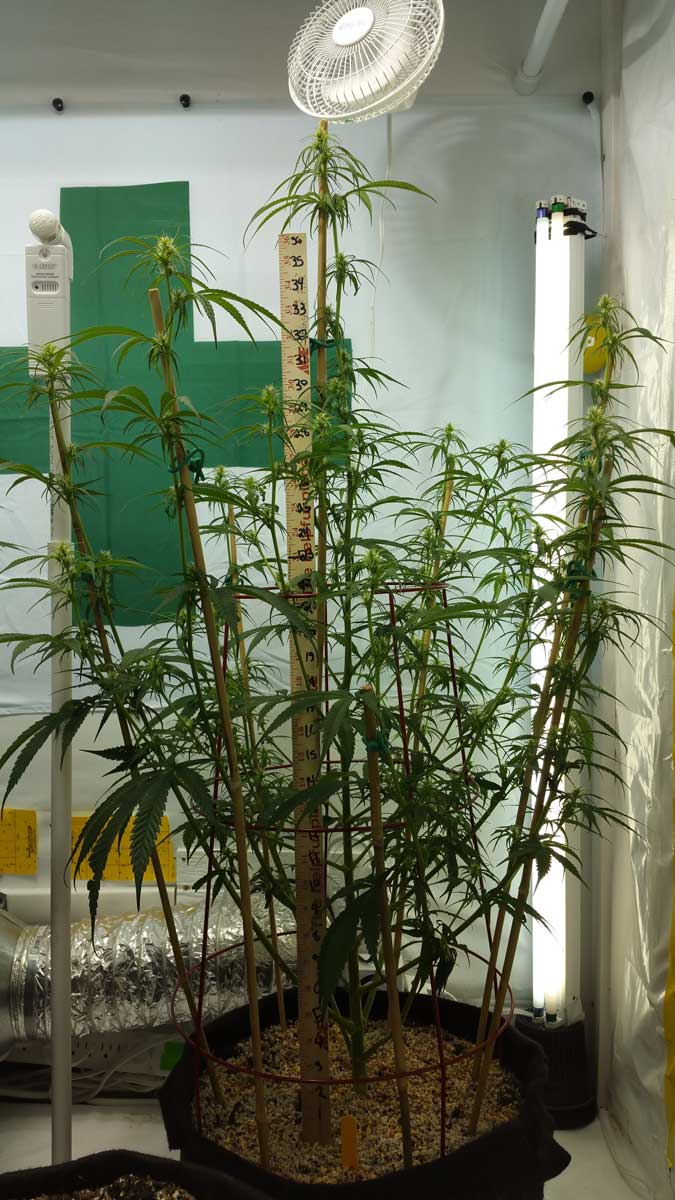
Sativa plant in the flowering stage - may grow with lots of stem between sets of leaves
You might not want to choose Sativa-based strains if you're using a small grow space like this!
Other Common Sativa Characteristics
Did I miss anything important? What are your thoughts?
- Sativa strains may need 3+ months in the flowering stage to be ready to harvest on the standard 12/12 flowering light schedule. In order to "hurry them along" they may need longer than average nights until harvest, for example a 11/13, 10/14 lor even 8/16 light schedule!
- Sativa's generally respond well to high levels of light and don't mind a little heat, but can easily get stressed by cold temperatures
- Sativa buds tend to give a more cerebral "in-your-head" effect than the more "body-based" Indica effects. Sativa buds may feel more energizing, so some people prefer Sativa strains for daytime use or in social settings.
- Some Sativa strains have trichomes that may never turn amber even after months of flowering. If your plant has fully white trichomes, it's possible it may be time to harvest even if no ambers are appearing.
- Harvest when trichomes are mostly cloudy with a few clears left for the most psychedelic effect
- Can be more common to get hermies, especially under stress or close to harvest if buds are not pollinated. If buds appear mostly done and suddenly throw out a bunch of bananas, it could mean it's time to harvest
- Can be nutrient sensitive, especially in dry heat, low light levels or if plant does not have many leaves. Not uncommon to see nutrient burn or Nitrogen toxicity at standard-strength nutrient levels.
- If you're naturally seeing a significant amount of stem between sets of leaves (as is common with many Sativa strains), defoliation can sometimes do more harm than good. With a stretchy plant, the buds and inside of the plant are often already as exposed as they need to be for optimum results. Defoliation is most effective at increasing yields of bushy plants where buds get hidden by leaves, which is much less common with Sativa than Indica strains!

My thoughts ....I have grapefruit from female seeds.
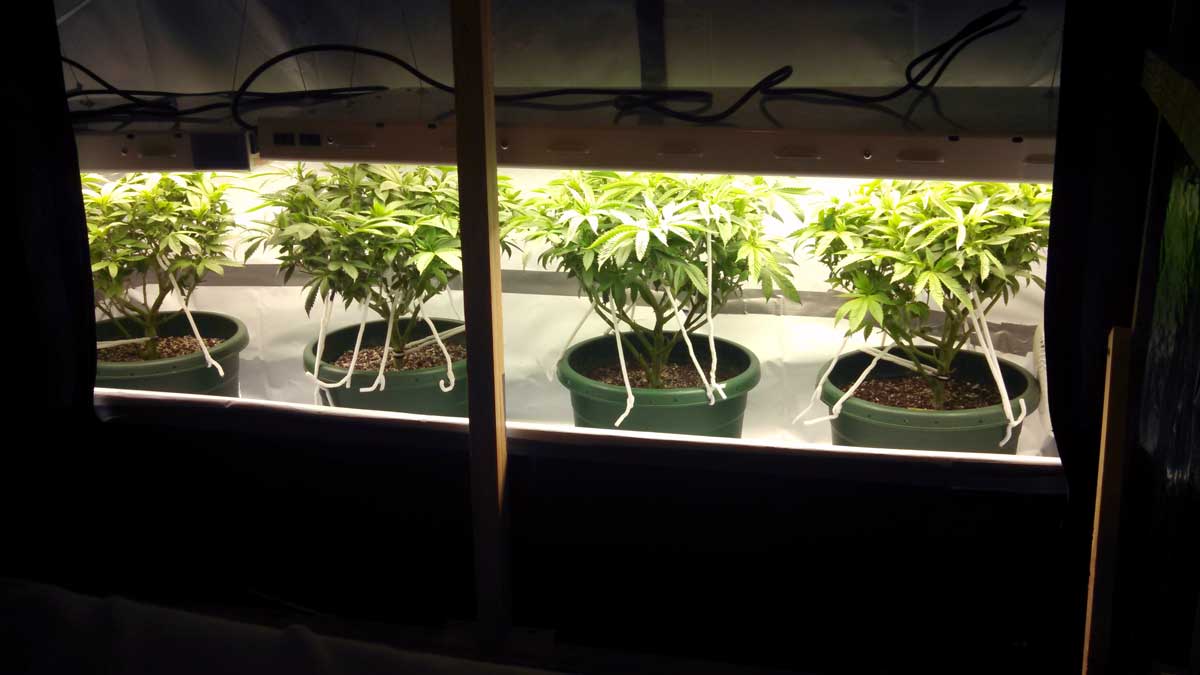
i wanted to learn how to prune and when to. I followed defoliation advice on here. I'm two weeks into bloom so I know the advice is actually to do it before bloom but I usually take off my bottom branches in week one of bloom as I read up to do elsewhere so I'm a bit late to really follow the advice on here. So I took a load of leafs off in the middle sections to let light get through the plants to the flowers forming lower down. I then thought I'll look for sativa specific advice on here and found this above....which worryingly goes against defoliation advice I used....ðŸ™ðŸ™ˆ More harm can be done defoliating a sativa ...ouch!!
hopefully what I've done doesn't harm mine. Reason why they might not be harmed is I let them get about 2.5/3 ft tall before I flipped them to 12/12 so now they're already 4.5 foot tall . So they are quite big and were quite bushy compared to a sativa like in the pic above ...like a 16 weeker or so. These grapefruit finish at week 8 so not that much of a sativa sativa. All a learning curve but if anyone has advice on pruning and getting a plant like these grapefruits to yield their best it would be appreciated