This is going slightly beyond my scope, i understand the technology around solid state devices but do not go too far into wiring topology.
First lets look at the technology, the drivers and then the topology last, which i may need help with.
Solid State Lighting:
Ultimately for the most efficient system, you want as much energy as possible, going into light, rather than heat. When looking at solid state lighting and color, blue is the most electrically efficient, this is why blue typically has the highest rated forward voltage, because less energy is being wasted through heat and its max junction temperature is reached at a higher forward voltage.
The efficiency of solid state lighting devices depends heavily on the junction temperature, which in turn, primarily depends upon three factors. The applied power, the thermal resistances between the junction and the ambient temperature. This is why when applied power is lowered, efficiency increases as thermal resistance across the junction decreases.
When looking at the efficacy (very important difference between efficiency and efficacy) of solid state lighting, this is referring to photometry and the perception of light by the human eye. For example, white has about the highest efficacy compared to other colors and so it is used primarily for environment lighting solutions for our visual needs.
Electrically speaking however, white is much less efficient than other colors such as blue or red because more energy is wasted as heat. Also because all colors are usually derived from blue, any result will always end up being less efficient from the color from which it is being made from.
For growing, you do not! want to use photometry to dictate your design. You want to use radiometry as plants have their own response curve that more closely match a linear sensitivity. For more information between photometry and radiometry read my article on light metric systems.
Constant Current, Constant Voltage And Wiring Topology
This is really going out of my depth and you will know better than me on this.
The different wiring configurations all have different applications and strengths. From what i know, the most efficient from a wiring configuration, would be a constant current with a series array. But would only be really good for few numbers of diodes. For larger arrays i would think something similar to what you suggested, series parallel ?.
That way you can have clusters of series which will allow the rest of the circuits to operate when certain clusters fail. But would you still use a CC or CV driver ?.

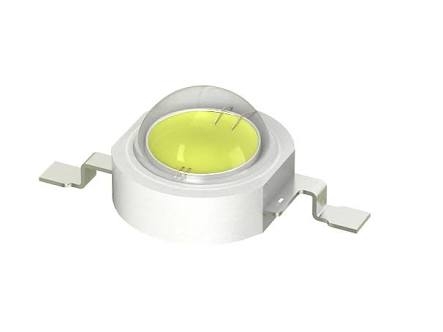 But I thought these were similar or the same from ViparSpectra LED panels and they received a lot of good reviews.


