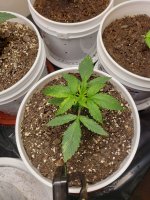
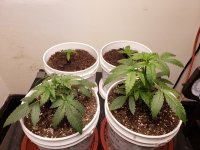
I’ve had the same problems as the original poster with fox farm soils and will not be using again either. To make matters worse, I found their response to my question about low pH to be ridiculous:
Thank you for contacting FoxFarm, I would be happy to help!
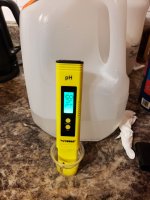
Receiving an accurate picture of the pH of soil can be very difficult. We do not recommend testing the soil pH by testing runoff or placing the probe directly into the soil. The pH buffers in our soils, such as oyster shell, will not register on your pH meter if you are testing the runoff or if you just place your pH meter in the soil. The oyster shell works as a pH adjustor once it comes in contact with water.
All FoxFarm soils come pH adjusted right out of the bag between 6.3 and 6.8, which is the ideal range for plant nutrient availability. In order to ensure that your soil pH remains in the proper range, we recommend that you adjust the pH of your nutrient solution between 6.3 and 6.8, alternate feedings and waterings, and periodically flush your soil of excess salts.
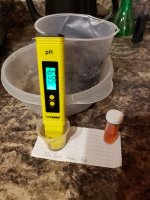
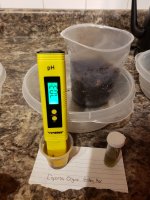
Make sure that you have a relatively new pH meter that is clean and calibrated according the manual instructions. If you are testing for soil pH, we recommend that you perform a soil slurry test, as described below. This ensures that all of the pH adjustors within the soil work properly and register on your pH meter. It is important to note that the used soil may have a different pH than the new soil from the bag due to the pH of the irrigation water.
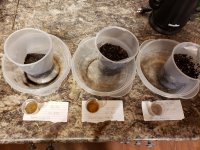
How to Perform an At-Home Soil Slurry Test to Determine Soil pH
Some gardeners like to be able to check the pH of their soil. Since actual soil pH can be difficult to determine without expensive lab equipment, we recommend a slurry test to determine the pH of your soil. Soil slurries provide a pH of the slurry, not the soil, and is used as an indicator of the soil pH. The soil slurry pH will be more acidic than the actual soil pH, which is to be expected. We recommend two slurries:
• A 1:1 slurry – mix 1 part soil to 1 part distilled water (by volume)
• A 1:5 slurry - mix 1 part soil to 5 parts distilled water (by volume)
• Thoroughly mix these slurries and allow them to sit for about 15 minutes
• Next, check the pH of the slurry with litmus paper, liquid indicator dye, or a digital pH meter
• The 1:1 slurry of
Happy Frog Potting Soilshould have a pH of
5.0-6.3
• The 1:5 slurry of
Happy Frog Potting Soilshould have a pH of
5.6-6.6
• The 1:1 slurry of
Ocean Forest Potting Soil should have a pH of
5.0-6.2
• The 1:5 slurry of
Ocean Forest Potting Soilshould have a pH of
5.6-6.7
• If pH values of the slurries are in the ranges provided above, you can assume that the pH of your soil is in the 6.3-6.8 range
* These pH ranges are based off our testing, which is done with tap water. Your municipal tap water may be different from ours, so your pH may be different as well.
If your soil pH is not within the correct range according to the soil slurry then you may want to adjust your soil. Dolomitic limestone will raise your pH and soil sulfur can lower the pH. Be sure to follow the manufacturer’s directions and water thoroughly after adding a pH adjustor so that it will be activated. If your pH is outside of the ideal range, your plants will not be able to take up nutrients and you will want to wait to fertilize the soil until the adjustor has taken effect. This can take up to 30 days. However, you can supplement with foliar fertilizers during that time regardless of the soil pH.
If you have any other questions please do not hesitate to contact us. To learn more about our company, new products, and download our latest feeding schedules please visit
www.FoxFarm.com.
Caelidh
Product Support Specialist
FoxFarm Soil & Fertilizer Company
​