

NebulaHaze
Administrator
THC & CBD Percentages: Anyone else run into low-THC strains that feel "strong"?
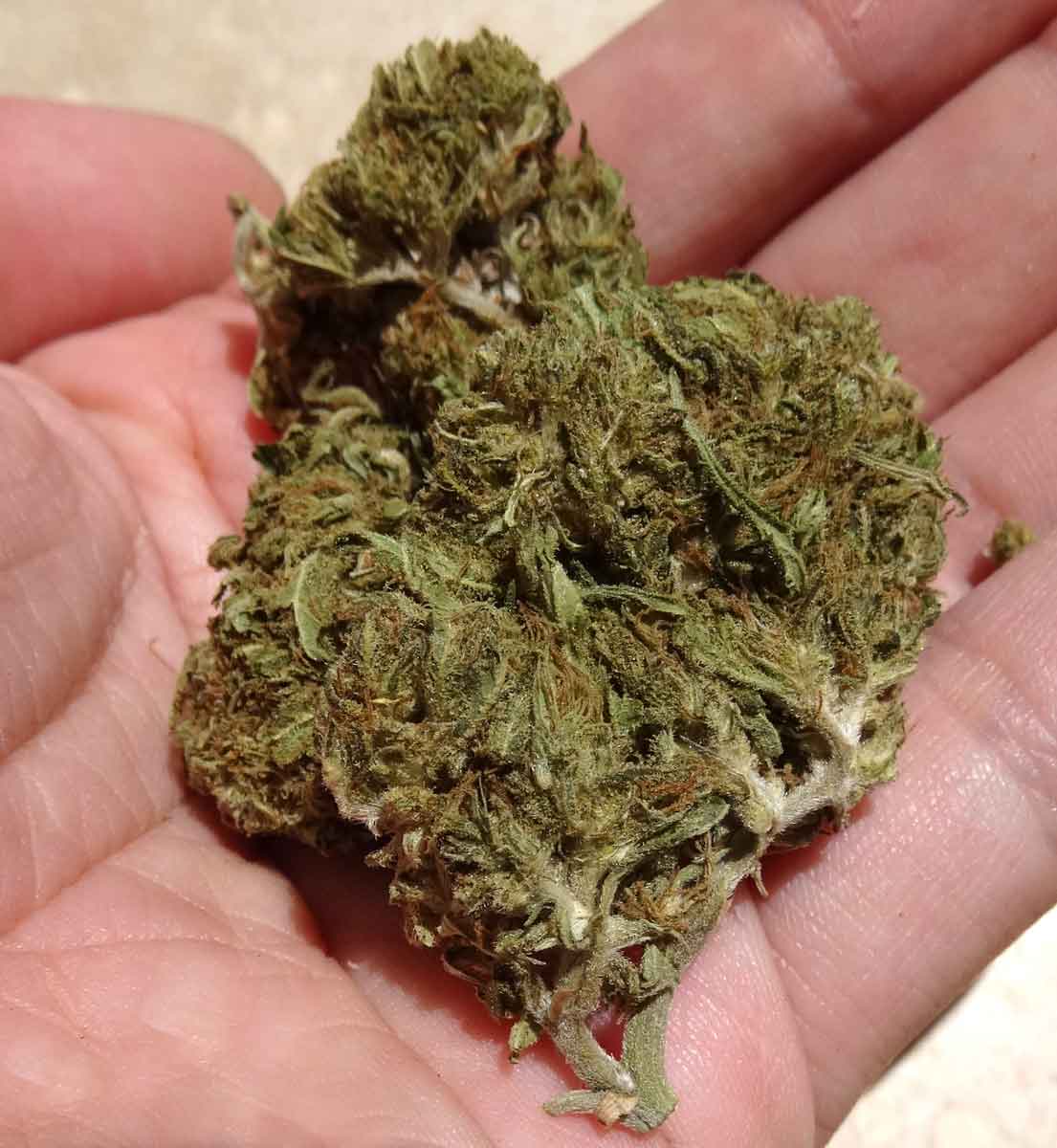
I tried a local strain today called Lemony Snickett, pictured here. I'd say it's about average as far as overall appearance:
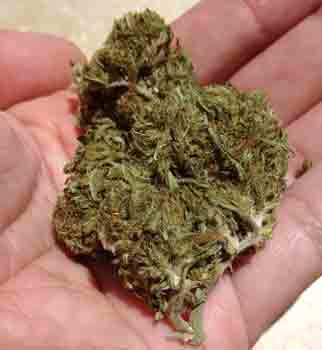
The smell is vaguely reminiscent of Citrus, but there isn't a particularly strong taste or smell when smoking.
In this case, first impressions were deceiving. I was dazzled by the effects of it! I felt giggly and relaxed, and almost like my vision was altered, in a good way! The effects were strong and long-lasting.
I learned that despite the above-average effects, this whole batch of buds was selling poorly at the local dispensaries, even at a clearance price of $125/ounce. It doesn't have a particularly notable smell or appearance, but the nail in the coffin was the results it got during cannabinoid testing. It tested at less than 12% THC.
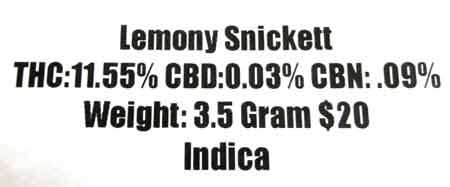
In my experience with dispensaries in Southern California, it seems like low cannabinoid numbers are almost a dealbreaker. There's a premium on buds that test very high in THC, and most of the buds you see on the shelves at dispensaries test between 18-30% THC. It's a good selling point to have high numbers on the label.
Yet in this case, I feel like the results of cannabinoid testing didn't predict the "strength" of the Lemony Snicket buds at all. I feel like the grower should almost leave off the percentages off the label, and sell these particular buds purely on the merits of their effects!
I've had this happen before with other strains, and I've also experienced the opposite where buds produced weak effects even though they tested above 30% THC!
Certain low-THC buds feel strong, while some high-THC buds feel relatively weak.
There is obviously a lot more going on in cannabis buds than just THC and CBD ratios, and we only have a small understanding of the effects of other cannabinoids. We do know that higher levels of CBD tends to make THC feel less "strong" (anything above 1% CBD is often considered to be "high" CBD). But even when CBD is not there, the THC ratios are still only a loose predictor of "potency".
We know that smelly substances known as terpenes have some effect, and we also know that curing buds for 2-4+ weeks increases their perceived potency significantly, even though their THC percentages basically stay the same. The overall effect of buds on top of THC/CBD percentages is sometimes called the "entourage effect", which is a nice way of saying we don't understand why certain strains feel so strong!
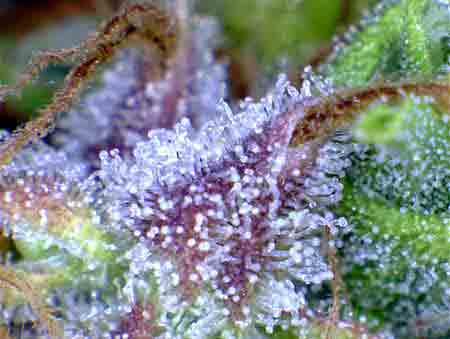
Certain nugs on the plant (specifically the leafy tiny nugs near the bottom with lots of sparkle) tend to test for high THC ratios for some reason, even though they don't smoke particularly differently from actual buds. Placement also varies by strain. Growers who are in-the-know can improve their cannabinoid numbers slightly by choosing buds from specific parts of the plant, and some will send in multiple samples so they can choose the best result.
Airy yet sparkly buds from the bottom of the plant may test higher for THC ratios compared to other buds on the plant, even though these leafy buds aren't particularly stronger when smoking.
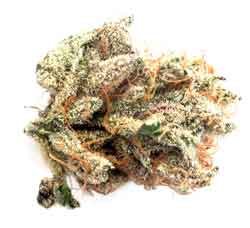
To throw another wrench into the mix, the cannabinoid testing only tests the ratios of cannabinoids. It doesn't test the overall amount of cannabinoids. So you could have trichome-encrusted buds with 100x the overall amount of cannabinoids compared to another batch of buds, resulting in far stronger effects, yet still possibly test lower in THC percentages.
What are your thoughts on cannabinoid testing?
I tried a local strain today called Lemony Snickett, pictured here. I'd say it's about average as far as overall appearance:
The smell is vaguely reminiscent of Citrus, but there isn't a particularly strong taste or smell when smoking.
In this case, first impressions were deceiving. I was dazzled by the effects of it! I felt giggly and relaxed, and almost like my vision was altered, in a good way! The effects were strong and long-lasting.
I learned that despite the above-average effects, this whole batch of buds was selling poorly at the local dispensaries, even at a clearance price of $125/ounce. It doesn't have a particularly notable smell or appearance, but the nail in the coffin was the results it got during cannabinoid testing. It tested at less than 12% THC.
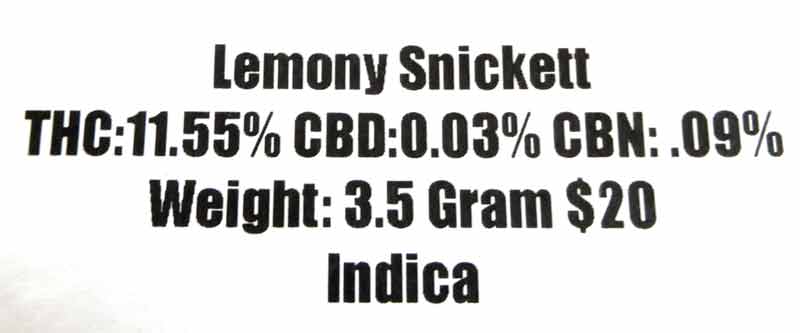
In my experience with dispensaries in Southern California, it seems like low cannabinoid numbers are almost a dealbreaker. There's a premium on buds that test very high in THC, and most of the buds you see on the shelves at dispensaries test between 18-30% THC. It's a good selling point to have high numbers on the label.
Yet in this case, I feel like the results of cannabinoid testing didn't predict the "strength" of the Lemony Snicket buds at all. I feel like the grower should almost leave off the percentages off the label, and sell these particular buds purely on the merits of their effects!
I've had this happen before with other strains, and I've also experienced the opposite where buds produced weak effects even though they tested above 30% THC!
Certain low-THC buds feel strong, while some high-THC buds feel relatively weak.
There is obviously a lot more going on in cannabis buds than just THC and CBD ratios, and we only have a small understanding of the effects of other cannabinoids. We do know that higher levels of CBD tends to make THC feel less "strong" (anything above 1% CBD is often considered to be "high" CBD). But even when CBD is not there, the THC ratios are still only a loose predictor of "potency".
We know that smelly substances known as terpenes have some effect, and we also know that curing buds for 2-4+ weeks increases their perceived potency significantly, even though their THC percentages basically stay the same. The overall effect of buds on top of THC/CBD percentages is sometimes called the "entourage effect", which is a nice way of saying we don't understand why certain strains feel so strong!
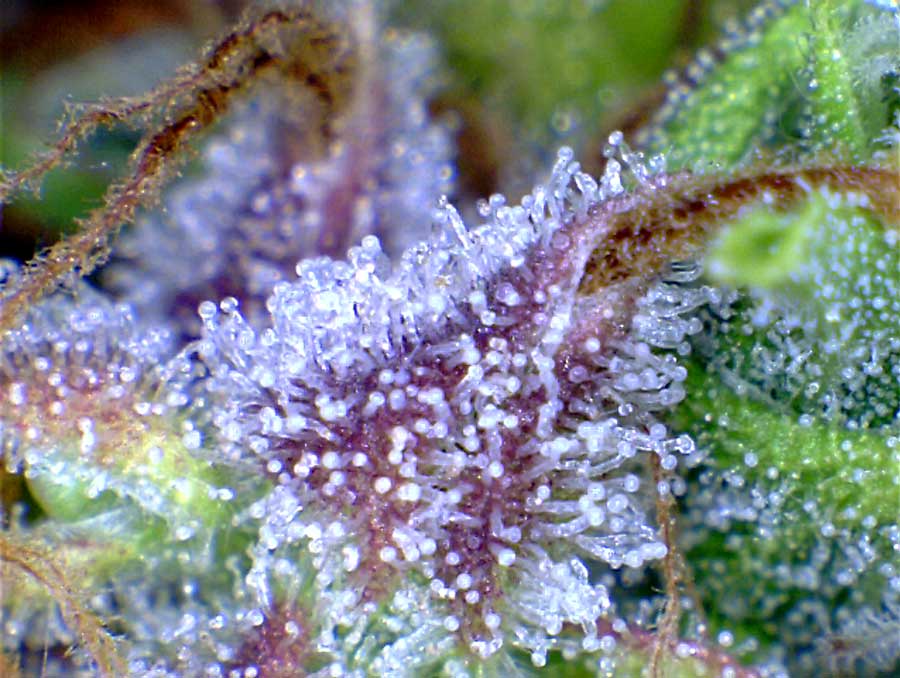
Certain nugs on the plant (specifically the leafy tiny nugs near the bottom with lots of sparkle) tend to test for high THC ratios for some reason, even though they don't smoke particularly differently from actual buds. Placement also varies by strain. Growers who are in-the-know can improve their cannabinoid numbers slightly by choosing buds from specific parts of the plant, and some will send in multiple samples so they can choose the best result.
Airy yet sparkly buds from the bottom of the plant may test higher for THC ratios compared to other buds on the plant, even though these leafy buds aren't particularly stronger when smoking.
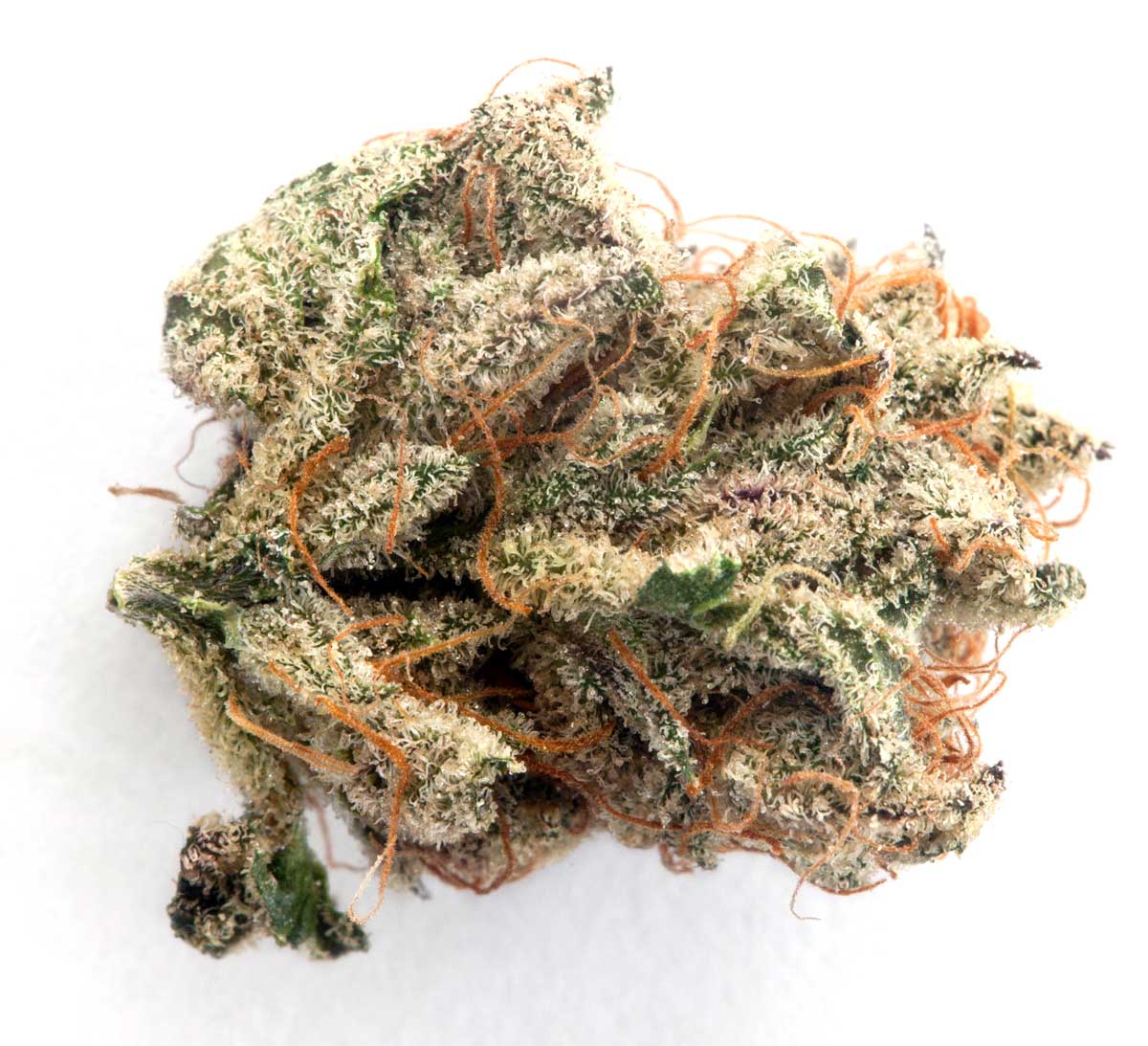
To throw another wrench into the mix, the cannabinoid testing only tests the ratios of cannabinoids. It doesn't test the overall amount of cannabinoids. So you could have trichome-encrusted buds with 100x the overall amount of cannabinoids compared to another batch of buds, resulting in far stronger effects, yet still possibly test lower in THC percentages.
What are your thoughts on cannabinoid testing?


