What's new
GrowWeedEasy.com
You're browsing as a guest. Sign up to join the conversation, share your grows, and get help from thousands of fellow growers — it's free and takes less than a minute.

Show Me What You Got (Nutes edition)

No3odiesShad0w

New member
So I wanted to do something a little different. Well are always posting pictures of plants and grows or problems we are experiencing. I thought maybe it would be fun to post some pictures of the nutrients that we're using in our current grows or past grows. It doesn't matter if you're an organic grower or a synthetic grower. ALL ARE WELCOME! Whether you have a full table of nutrients or just a simple 2 bottle feeding regiment.

Post some pictures of the tools that make you successful. If you want to give any additional information about feeding schedule or amounts used during different stages of the plants life. Let us know why you like the nutrients that you use. Maybe share a bad experience you had with a specific nutrient line or product.

Might be interesting to see what everyone is working with. Maybe someone will be inspired to try something new or learn more about a regiment that they may be using but aren't very familiar with it yet or maybe they're a new grower and are looking for more info on feedings and nutrients.
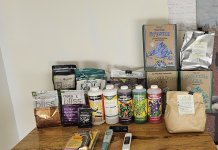
 
My growing style is primarily organic. I dabble a little with the only synthetic fertilizer I ever purchased with questionable results. The organics work well for me.
I usually mix in most of those items when I make my soil then later I top dress materials in. Simply just water and watch grow after that. It's a very hands off way of growing. Most of the time you're just adding pH'd water. I've been organic gardening outdoors with my mother since I was a young kid. So it was only natural that organic growing indoors would be my default.
NLS makes a great compost. I love using their compost to supercharge my soil with all the goods needed for fantastic growth. Along with their Flower Power PK booster compost for flowering and their Soil Revival innoculant. It's a winning trio for any organic grow.
Neem seed meal is a great nitrogen source that slowly breaks down over time giving you nice slow release organic nitrogen with added soil conditioning enzymes as the seed breaks down.
Insect frass is another good nitrogen source that also breaks down over time. Insect frass is also a great protozoa innoculant. There are very few products on the market that have protozoa in them. Having protozoa in your soil food web is incredibly beneficial. They're one of the bigger microbes and they eat most of the smaller ones turning them into nutrition for your plants.
Kelp meal has tons of micro nutrients and enzymes to help your plants grow fast and strong. Seaweeds are the fastest growing plants in the world. You can tap into some of that speedy growth enzymes by using kelp meal.
Mycorrhize is a must for every organic gardener(with some exceptions like broccoli or cabbage). The mycorrhize fungus colonizes and taps into your plants roots to create a symbiotic relationship where the plant gives the fungi sugars in return for nutrients that the mycorrhize finds in the soil with its mycelium network. It helps with pH regulation creating the correct pH conditions in the riseosphere of the roots. It helps bring water to the plant and gives the roots oxygen while eating up the carbon dioxide in the soil.
Another must is worm castings. They have a great microbiome ecosystem of all kinds of goods bacteria and nutrients. They help hold moisture and are great to get organic matter started with decomposing.
Fulvic acid helps chelate nutrients and makes them readily available for the plant to use.
Silica is non essential but a beneficial supplement. It helps build stronger plant walls and helps with resisting stress.
Dolomite lime and the gypsum are great calcium sources for front loading soils. Dolomite Lime has the added benefit of also having magnesium. It's also a great pH stabilizer if you have acidic soil.
Over the years I've accumulated quite a bit of goodies for the girls. Some of the stuff I use for mushroom cultivation as well. But I love using and learning about different organic amendments.
 

Attachments

  • photo166239.jpg
    photo166239.jpg
    1.3 MB · Views: 1
I am going to throw down with perhaps an unpopular view.
To me, organic means sticking some seeds in the ground and using what is already in the soil. Maybe put some in a container for an indoor grow with organic lighting and otherwise organic tent environment. When people start mixing the different powders and organisms, they get an unnatural, engineered growing medium. Frankensoil.
I understand wanting to get the best and the most. But I can't call anything but growing in the ground organic.
 
I would consider organic to be growing without chemicals and using what 'was once alive'. Using bat guano, worm castings, teas made from banana peels or compost would all be organic. Growing using living soils where you pretty much just water and the micro organisms in the soil feed the roots of the plant would also be organic to me as long as there no nitrates in the ph up-down ect.
 
Everything in the end is organic chemistry. It all breaks down to the chemical compounds that the plant can use. Even organic matter has to go through chemical changes to become plant food. It's a matter of feeding the soil vs feeding the plant with salt based fertilizer. Both are valid. Both produce great flower. It's just a matter of what you're most comfortable with
 
I took an organic chemistry course and Im pretty sure it was the study of the chemistry of what once was alive. In food labeled organic it is supposed to NOT have synthetic chemicals used or teating the crop during the grow. That's kinda what organic means to me.
Nothing synthetic
 
I'm not bagging on what is considered organic. I buy organic fruits and vegetables and junk that are sold as organic. When I had my garden, everything compostable went in my compost pile, later mixed in the garden. Gimme time at a farmers' market to make me happy.
I'm just talking about building soil vs. digging a hole. Maybe I'm being too... I don't know... not an asshole... something.
F your I, the USDA requires a product to be 95% organic to be called 100% organic.
 
But it's also considered USDA organic when they take farming refuse and use it as compost. Even though it was sprayed with Roundup and other kinds of chemicals because it's farm waste and it's going to be composted into fertilizers for plants that stuff is considered organic.. So I don't exactly trust the government when it comes to properly labeling things as organic.
Now as far as organic matter goes then you're absolutely right it's basically anything that was once alive that now has become food for something else because it's dead
 
Nitrates occur naturally in ground water. It would be difficult to find any ground water without them, anywhere. They are completely organic.
 
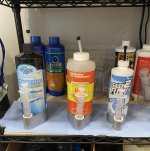
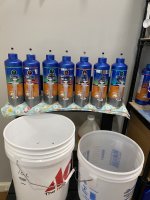
My nutrient set up. Don't laugh at the DIY syringe holders. I mix nutrients using ml/L and like the syringes for accuracy, ease of use, and tidiness. I've added the Easy Flow to the mix this grow. It's supposed to keep the irrigation lines clear. We'll see.
 

Attachments

  • photo166337.jpg
    photo166337.jpg
    2 MB · Views: 4
  • photo166338.jpg
    photo166338.jpg
    2.4 MB · Views: 3
Back
Top