General Information about Potassium
Potassium is yet another important component for plant growth and development. Sufficient amounts of potassium in your plants means that they will grow sturdy and thick stems. It also aids with disease-resistance, water respiration, as well as photosynthesis. Basically, it is necessary for all activities having to do with water moving within the plant. Potassium is needed for all stages of growth, especially important in the development of buds.
Effects
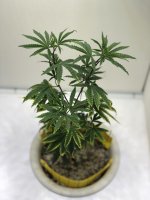
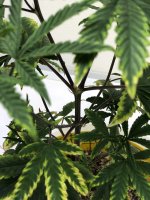
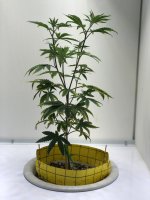
Potassium deficiencies are practically a non-issue among hydroponic setups. That’s because it mainly occurs on outdoor soil grows. Problems with potassium deficiency can appear even when the soil is well fertilized and rich. Insufficient amounts of potassium in your plants can cause the plants’ leaves to grow at reduced speed. Afflicted leaves show a scorched tip and edges around the leaves. Branches are becoming frail and can snap easily.
Potassium deficiency has almost the same symptoms as iron. As we mentioned above, for potassium, the tips of the leaves twist and the edges burn and die. Older leaves may show a red color and leaves could curl upwards. You can also spot necrosis, that can happen on the margins of larger fan leaves. Older leaves will exhibit different patterns of color and turn yellow between the veins. The plants’ overall development is halted, especially during vegetative stage. Too little amount of potassium also slows the growth of buds during flowering stages. Relative humidity is key in preventing potassium deficiencies: if humidity is very low, potassium deficiency is almost a certainty.
Finally, potassium can get poorly absorbed when combined with too much calcium or ammonium nitrogen; cold weather doesn’t help either. Having too much sodium (Na) causes potassium to be displaced.
Solution
- Adjusting the pH to the appropriate levels.
- In soil: potassium gets locked out of soil growing at pH levels of 4.0-5.5. Potassium is absorbed best in soil at a pH level of 6.0-9.5.
- For soil-less setups: potassium gets locked out of hydro and soil-less mediums at pH levels of 4.0-4.5, 6.0-6.5. It is absorbed best in hydro and soil-less mediums at pH levels of 4.7-5.3, 6.7-8.5.
- Watch out for cold temperatures. As we mentioned at the start of this article, proper temperature control can save your plant’s lives. Colder temperatures (lower than 60°F (15°C), as well as extreme temperature fluctuations, can make it harder for the plant to absorb phosphorus. Cannabis plants are more likely to show signs of a phosphorus deficiency when the temperature drops too low, or if they go through a cold spell.
- Provide your plants with the right nutrients. All of the nutrients in the market contain potassium, so if you are a grower, you probably have a good source of the component somewhere around your grow room.
- Potassium deficiencies might also be confused with light burns. See our temperature control section on this article for more information.
Tips from Growers
“I always use p-k 13/14 in flowering, this really does help lower production and the plants use of potassium.â€
“You can add potassium naturally by adding a liquid solution of wood ash, chicken manure or semi-liquid manure but be careful to avoid nutrient burn. Grape and vine extracts also contain a lot of potassium.â€
Hey
yellow I found this, Just a thought ? The photos didn't print Look at zink and potassium. Good Growing !!
marijuana-symptoms