

Growing & Caring for Sativa Strains
When it comes to growing cannabis indoors, Sativa plants are typically a little tougher to care for than Indica plants. Sativa strains originated from hot regions near the equator, and as a result they have a few properties that can catch an indoor grower by surprise.
Note: It is very rare to find a "pure" Sativa strain since nearly all marijuana strains available today are some sort of hybrid. The following is talking about strains with a lot of Sativa plants in their ancestry and as a result carry a lot of common Sativa characteristics!
Appearance of Sativa Plants
Other Common Sativa Characteristics
When it comes to growing cannabis indoors, Sativa plants are typically a little tougher to care for than Indica plants. Sativa strains originated from hot regions near the equator, and as a result they have a few properties that can catch an indoor grower by surprise.
Note: It is very rare to find a "pure" Sativa strain since nearly all marijuana strains available today are some sort of hybrid. The following is talking about strains with a lot of Sativa plants in their ancestry and as a result carry a lot of common Sativa characteristics!
Appearance of Sativa Plants
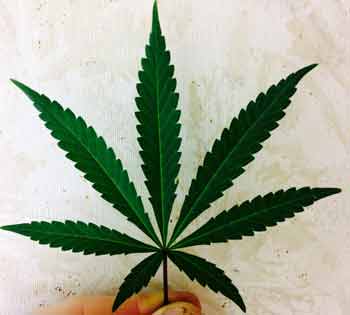
- Often have long, skinny leaves
- Generally stretchy appearance with lots of side branching and plenty of space between sets of leaves (as opposed to the the short, squat Christmas tree shape of an Indica plant).
- Tend to grow tall and fast throughout their life, but may double or even triple in height after entering the flowering stage.
- Their size can quickly get out of control in a small grow space, though an experienced grower may be able to use the fast growth to their advantage!
- Buds often have "foxtails" and may be loose or airy compared to Indica buds, which tend to be solid and dense.
Typical Indica vs Sativa plant - grown indoors together under the same conditions
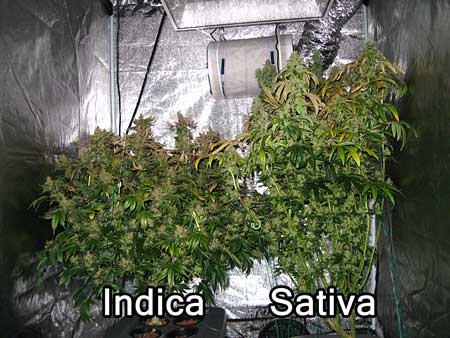
From seed to harvest, these plants were given an equal amount of light from the sides. The Indica plant stayed short while the Sativa plant on the left grew far taller in the same conditions and time.
Long, thin "fingers" on leaves, compared to Indica leaves which tend to be round and fat.
Buds often have "foxtails" (buds grow in little towers) and/or may be relatively "wild" looking
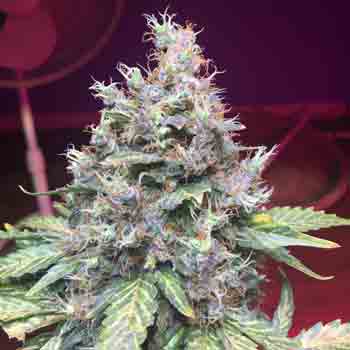
This is what the buds of a "true" landrace Sativa looks like - basically all foxtails! Most available "Sativa" strains are actually hybrids with at least a little Indica genes mixed in to help increase bud density and improve overall structure.
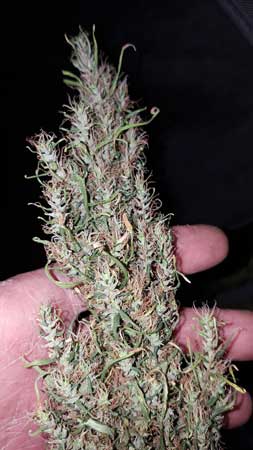
Sativa plants (Panama strain) grown indoors - amazing and unique buds effects, but also big and tall plants!
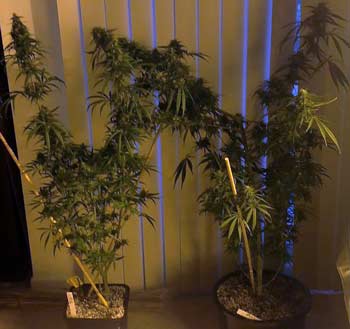
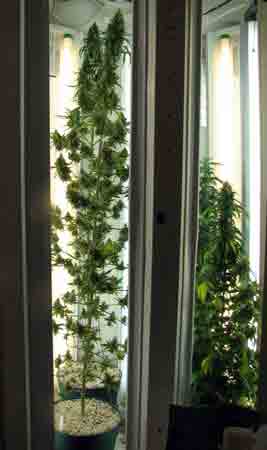
Sativa plant in the flowering stage - may grow with lots of stem between sets of leaves
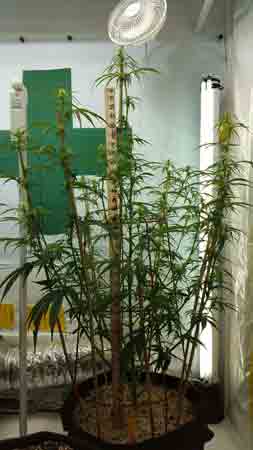
You might not want to choose Sativa-based strains if you're using a small grow space like this!
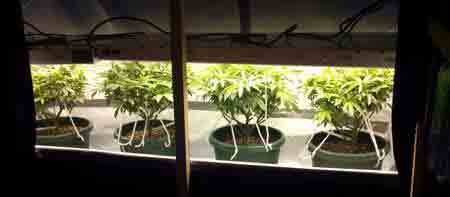
From seed to harvest, these plants were given an equal amount of light from the sides. The Indica plant stayed short while the Sativa plant on the left grew far taller in the same conditions and time.
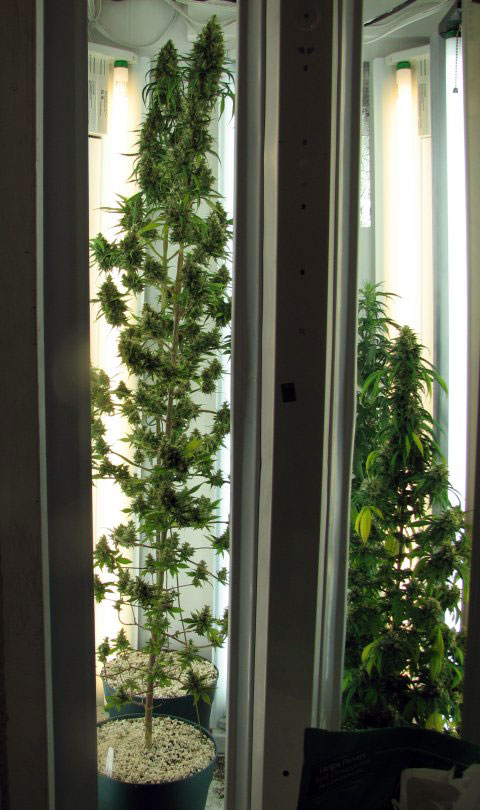
Long, thin "fingers" on leaves, compared to Indica leaves which tend to be round and fat.
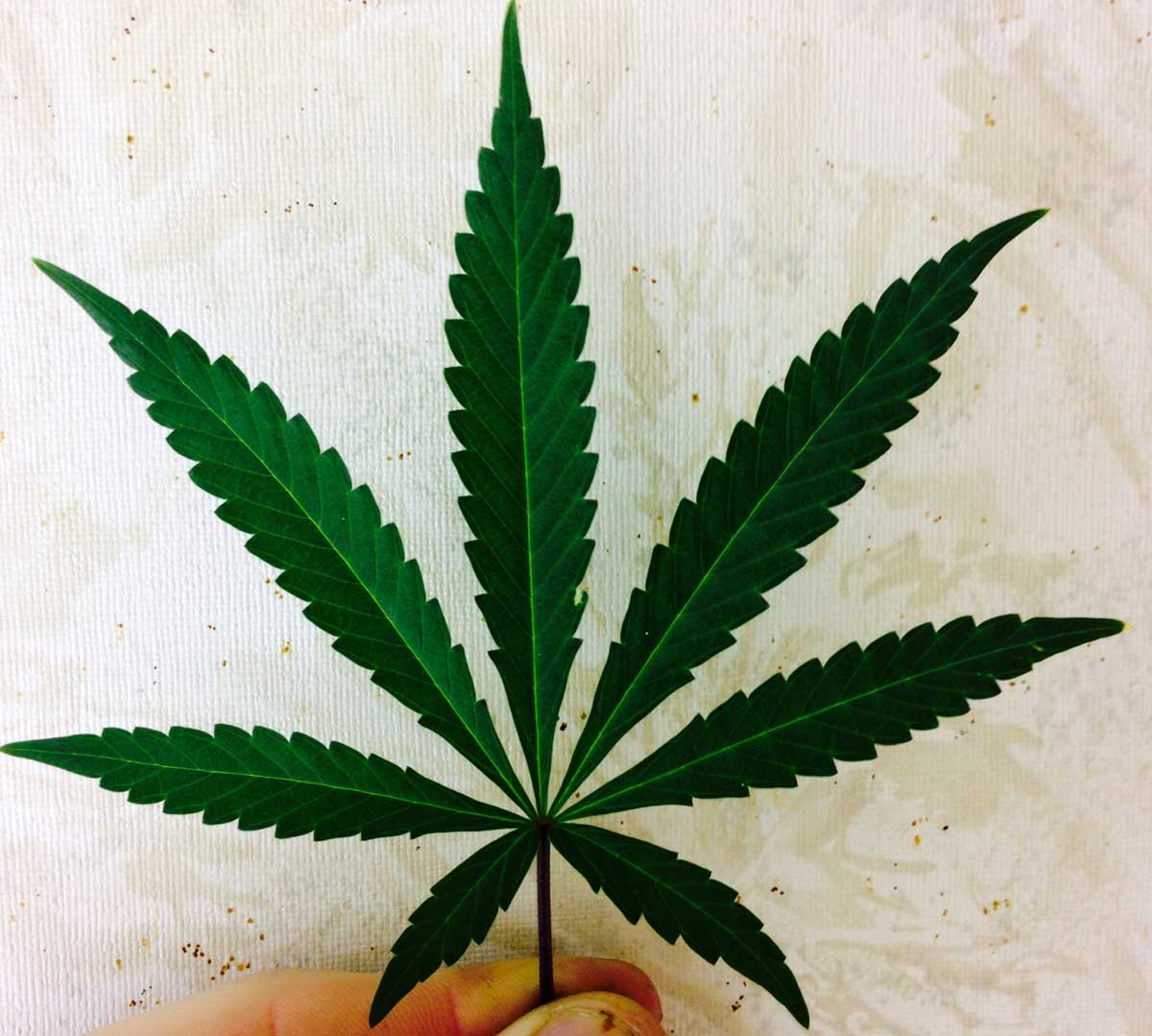
Buds often have "foxtails" (buds grow in little towers) and/or may be relatively "wild" looking
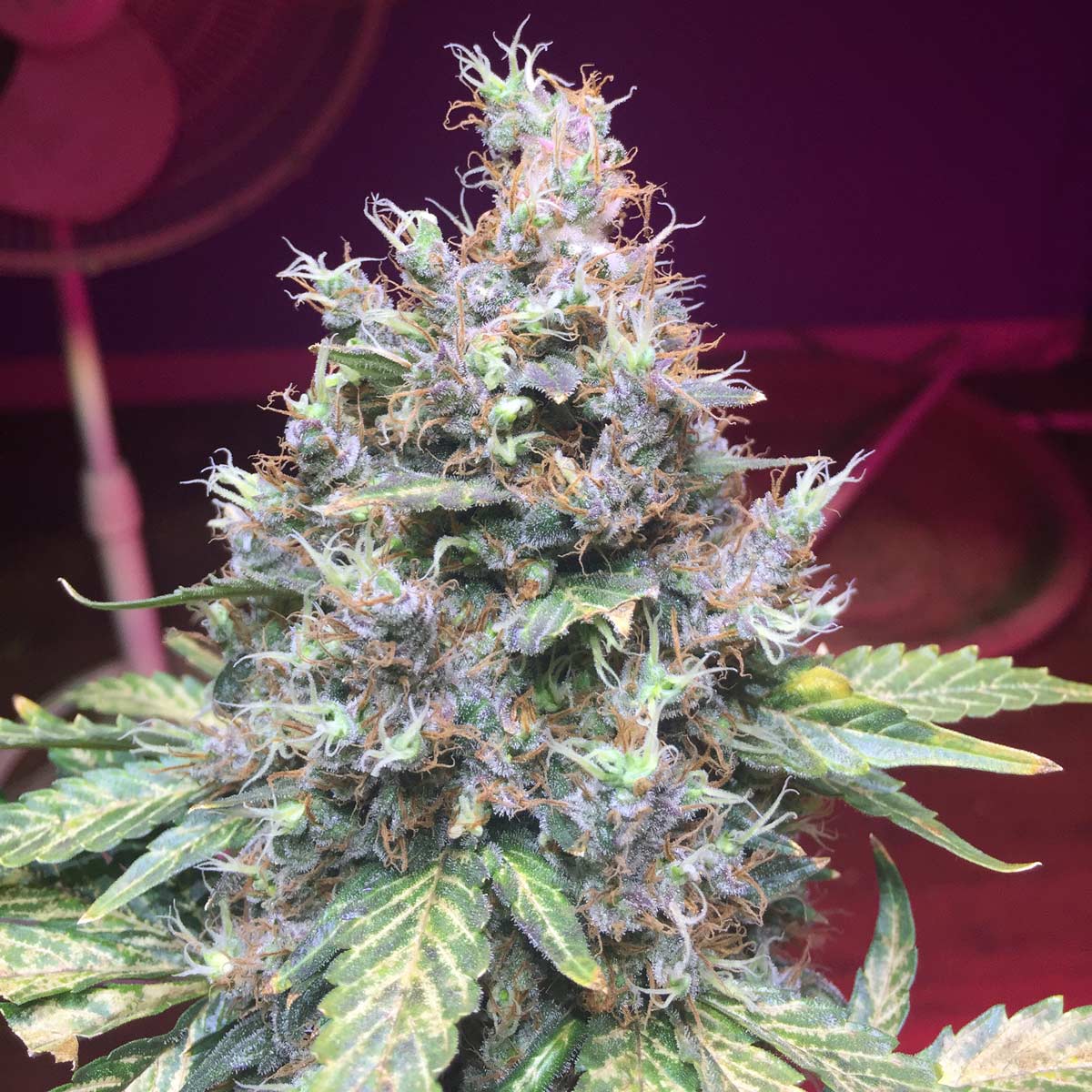
This is what the buds of a "true" landrace Sativa looks like - basically all foxtails! Most available "Sativa" strains are actually hybrids with at least a little Indica genes mixed in to help increase bud density and improve overall structure.

Sativa plants (Panama strain) grown indoors - amazing and unique buds effects, but also big and tall plants!
Sativa plant in the flowering stage - may grow with lots of stem between sets of leaves
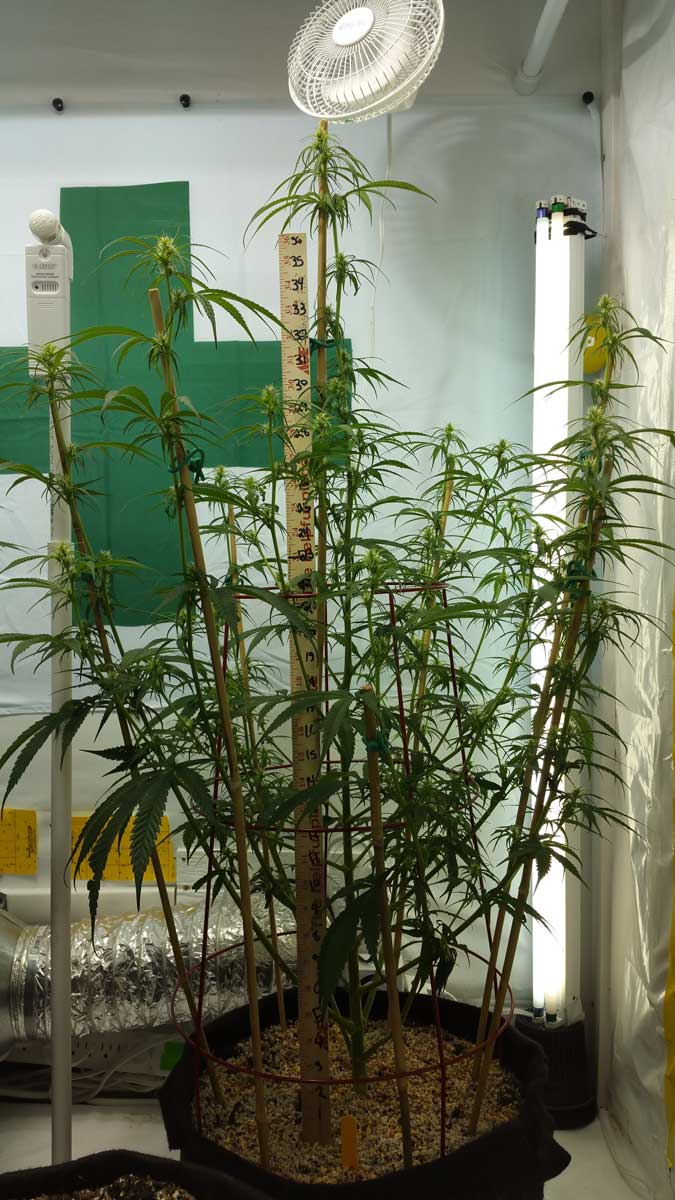
You might not want to choose Sativa-based strains if you're using a small grow space like this!
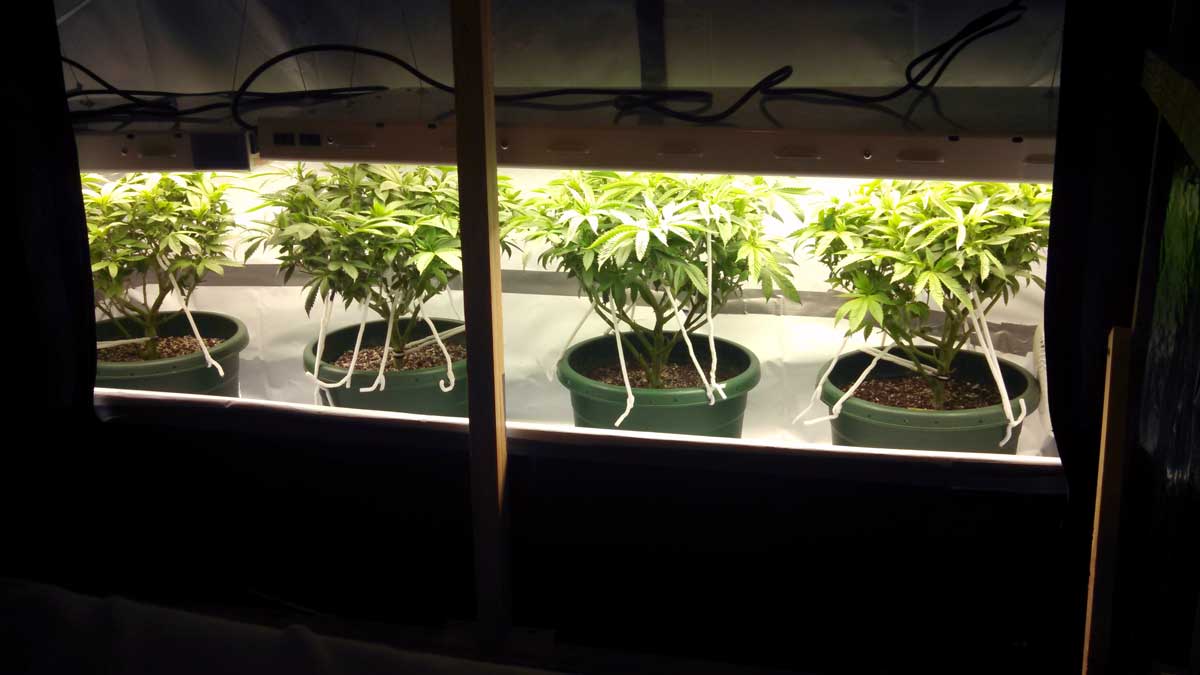
Other Common Sativa Characteristics
- Sativa strains may need 3+ months in the flowering stage to be ready to harvest on the standard 12/12 flowering light schedule. In order to "hurry them along" they may need longer than average nights until harvest, for example a 11/13, 10/14 lor even 8/16 light schedule!
- Sativa's generally respond well to high levels of light and don't mind a little heat, but can easily get stressed by cold temperatures
- Sativa buds tend to give a more cerebral "in-your-head" effect than the more "body-based" Indica effects. Sativa buds may feel more energizing, so some people prefer Sativa strains for daytime use or in social settings.
- Some Sativa strains have trichomes that may never turn amber even after months of flowering. If your plant has fully white trichomes, it's possible it may be time to harvest even if no ambers are appearing.
- Harvest when trichomes are mostly cloudy with a few clears left for the most psychedelic effect
- Can be more common to get hermies, especially under stress or close to harvest if buds are not pollinated. If buds appear mostly done and suddenly throw out a bunch of bananas, it could mean it's time to harvest
- Can be nutrient sensitive, especially in dry heat, low light levels or if plant does not have many leaves. Not uncommon to see nutrient burn or Nitrogen toxicity at standard-strength nutrient levels.
- If you're naturally seeing a significant amount of stem between sets of leaves (as is common with many Sativa strains), defoliation can sometimes do more harm than good. With a stretchy plant, the buds and inside of the plant are often already as exposed as they need to be for optimum results. Defoliation is most effective at increasing yields of bushy plants where buds get hidden by leaves, which is much less common with Sativa than Indica strains!
Last edited:


