What's new
GrowWeedEasy.com
You're browsing as a guest. Sign up to join the conversation, share your grows, and get help from thousands of fellow growers — it's free and takes less than a minute.

Grow light height

Tazard

New member
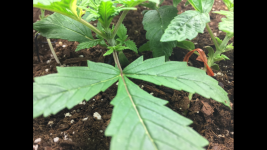
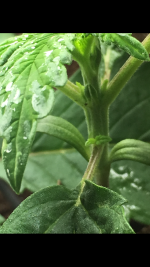
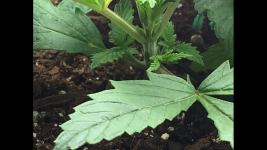
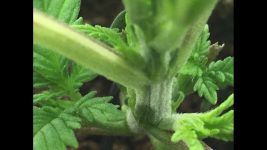
I have seen manufacturer charts providing height for lights above plants. However, I have not noticed where anyone has addressed the lowering of the light below manufacturer recommendations. When I was growing in the past (1980's) during the veg stage we would set our lights a bit higher than we thought they should be and then watched the plant for optimal growth (very short nodal distances see photo) while monitoring the canopy temperatures or signs of light burn. This may not be effective if you're growing more than one strain under one light since some plants may be more photosensitive than others. I don't know about LED's.
 

Attachments

  • photo21614.png
    photo21614.png
    847.5 KB · Views: 1
  • photo21635.png
    photo21635.png
    752.3 KB · Views: 0
  • photo21640.png
    photo21640.png
    768.8 KB · Views: 0
  • photo21641.png
    photo21641.png
    708.2 KB · Views: 0
Depends on strains a lot, sativa can handle my lec and my led better than indica. Depends on the health of the plant and obviously the type of light. All my lights were lowered below manufacturers recommendations.
 
Getting the light as close as possible is not going to increase yeilds, infact it can decrease yeilds.
Whats more important is the distribution of light over the canopy. Your light output capacity is going to dictate your yeilds, the amount of photons leaving the light source is the same no matter where you place your light. Inverse square law is wrongly thought of as the dustruction of energy over distance, where as it is just a divergence of energy through space.

Read here for more info.

http://forum.growweedeasy.com/forum/growing-community/101595-how-high-do-i-keep-my-light
 
Danofdanger What you said is correct however you were not considering that the inverse square law applies to intensity and not energy. It is Like the equivalence of like say you were putting 50 pounds on one square inch and then you put 50 pounds on 4 square inches the effect of pressure is much less. This case that would be the lumens or as you mentioned the intensity (pressure) of the light. Placing lights as close as possible will (lumen for lumen) increase canopy penetration although each individual light will have a smaller area of effect as it will be inversely proportional to the inverse square law.
 
The use of the term energy is just a simplistic term used for better interpretation. You do prove my point however. Intensity is correct, however it may be more accurate as density but it has been recommended to avoid the use of the term now as it conflicts with other fields of science. You are right that penetration is improved by the placement of light, this comes down to my description of how the distribution of light is more importent. However you have to consider the biology of the plant also to understand why getting the light closer is not importent, infact it can be counter productive. I can go into more detail if you like.

Also inverse square law does not apply to typically any grow enviroment. ISL is only valid when a light source acts like a point source, which can be determined geometrically by its interpretation of a point of view. This is actually quite vauge but this is due because ISL does not start to hold true until light starts to radiate in a isotropic or three dimensional behaviour. With any light source that is not acting like a point source to the observer, light will not distribute in a isotropic fashion at close distances (metres). This is practically any artificial light source we have. This is extended further by collimating the light with reflectors, focusing the light, preventing the light from diverging. Not to mention wall reflection as well.
So infact, light when considered in these enviroments will actually fall less than the ISL.
Theres also the matter of LED lights which extend the depreciation with light optics, this places a theoreticle position of the light source behind the physical location. Allowing light to fall off much less than that of even typical lights. This can allow deeper penetration. This is how lasers work, but that goes into a whole other bag of hurt, dealing with concepts such as reyleigh range.

I could go into much detail on plant biology with respect to light, but il keep it simple for now.
The compensation point for most plants is around 50um, this is the minimum level which plants require to survive. (We are talking small plants like windowsill types).
As light intensity increases, the quantum yeild (efficency of light acceptance) stays the same up until about 500um. This means that as the light increases from the compensation point to the compression point, the plant utilizes the photon energy at the same efficiency throughout this range. On a graph this would be a linear slope with respect to the increase in light intensity. Once the compression point is reached, quantum yeild decreases, this point appears to be around 500um. As light intensity increases past this point, carbon utilization depreciates, this is because the rate of intracellular concentration cannot keep up with photosynthesis. As intensity increases, quantum yeild decreases. This is further advanced by other conditions such as photoinhibition and photoprotection the higher the intensity is.
A good reference for a study done on cannabis photosynthetic rate is the 2008 chandra study.

So you see, getting the light as close as possible is not effective, a optimum distance is desired, one where quantum yeild is good and canaopy iniformity both horizontally and veritcally is acheived.
Personally i use 700uml or around 60,000lux for my light distance, this only slightly hinders the photosynthetic efficiency but allows for better canopy penetration. Like we discussed ;)

I really want to write short articles on such topics, i just find myself too busy and too tired.

I hope this helps, let me know if you would like any help. ;)

 
I could not entirely grasp your analogy, i believe you understand it correctly (correct me if im wrong). However 50 pounds on one square inch, is the same pressure or weight as 50 pounds on 4 square inches. Its only that the pressure or weight is spread out over more space, you are effectively getting the same result. Just the surface area utilized is different. This describes somewhat about the total light capacity mostly dictating yeilds (excluding all other factors) When applying ISL with the analogy, measuring the same surface area weight or pressure (if that were possible) of the two different surface areas, would result in the larger surface area giving less pressure or weight of one square inch on a 4 square inch surface. However this is not a great analogy with ISL, it confuses things. The pressure or weight wouldnt be 1/4 as the desnity of the material does not change.
Point sources of gravitational force, electric field, light, sound or radiation obey the inverse square law. Other physical forces do not.
 
Danofdanger I only read the first sentence or two but pressure does not equal weight or force. pressure is force per area so it would be given in like pounds per square inch not pounds or should you be British it would be given in kilograms per centimeter squared as opposed to kilograms. I'm not here to correct anyone's physics so I won't bother reading any further.
 
Yep i understand, i was just interpreting the weight given as either pressure or weight, which i believe doesnt really matter either way. Comes to the same conclusion.
The rest of the information given was just to hopefully supply some information to acertain the right idea on light manipulation.
;)
 
Point being a higher intensity will penetrate the canopy further but over a smaller area (solve ISL for d). I can tell you are educated, well read, or a great copy and paster or a combination. I would suggest phy202 will cover light.
 
Yep thats correct, higher intensity will penetrate deeper. But doesnt follow ISL (read my last post). Also the total amount of photon energy received by the plant, is unchanged no matter what intensity or height the light is (excluding variables such as reflective losses, light footprint, coverage etc). Only the distribution characteristics of the photons to the plant. In other words, for the most part. Yeild is the same, but the uniformity of the developed produce will by some degree be dictated from the distribution of light. Saying that, increased penetration could offer better quality and slightly more yeild.

Im well read, electrician by trade. Have read several books on numerous science subjects. Have covered PHY101.
;)
 
Last edited:
Thanks. I have 3 strains growing with excellent coverage from the CFL's. 2 of the strains handle 1100-1200 lumens at canopy level very well (see pics seeds were started on the 23rd of May). Some sprouted 24h later others took 2-3days. The other 2 strains continue to curl with lightning at 700 lumens. I'm about to just give that strain shade. 🤢
 
http://sciencing.com/calculate-light...y-7240676.html Light electricity optics magnetism polarization and heat were covered in my phy 202 class phy 201 was static and dynamic motion. Phy101 (I have never taken) is algebra based physics as opposed to calculus based. I guess the only real difference is we learn to derive the algebraic equations you were given in phy101. I have a BSCE and a Meng.
 
Last edited:
Yep this is correct, as you can see the calculations here take into equation the geometry of the point source.

"The light intensity at a particular point depends on the configuration of the light source and the directions in which it radiates light."

The geometry and direction of the light source affects the math for calculating ISL, so much infact that ISL does not apply until the geometry of the point source starts acting like a point source from an observers POV. Standard incandescent light bulbs will act like a point source after a couple of meters. But at close distance ISL will not apply.
This is how fibre optics go for such long distances, their energy is reflected and does not diverge, allowing only reflective losses to occur.

As for most other lights, at close distances (talking metres) the light will fall off less than ISL. You can measure this with a meter, done it myself.
Take care, good luck ;)
 
I read your posts. I can tell what is copy paste and what is your opinion (interpretation) of the data supplied. Did you understand the example given? That's a rhetorical question since the example was based on 81cm (81x2.54=31.89") using a 60w bulb. I do believe you are well read and even possibly an electrician However, you are reacthing conclusions not supported by the references and posting these as facts. 🤔
 
Tazard, im not one to get into arguments and i ment no disrespect if felt given. I assure you nothing is copy and paste except for what is quoted. What i have provided is based on my "own" understanding, which i believe is correct. Iv seen many people get hung up on this problem but i assure you myself and others agree with what i have suggested. I am all about the convincing argument so rest assured if there are errors i will always rationally accept any.

Your suggested source i did not apply any calculation, i merely looked at the reference and pointed out the suggested protocols needed for calculating light intensity. I do not know at what distance ISL starts to apply, it may be after a metre. But if you are wanting references, heres wikipedia detailing it.

Under justification it details the requirements needed for ISL to apply

https://en.m.wikipedia.org/wiki/Inverse-square_law

"The inverse-square law generally applies when some force, energy, or other conserved quantity is evenly radiated outward from apoint source in three-dimensional space. Since the surface area of a sphere (which is 4πr2 ) is proportional to the square of the radius, as the emitted radiation gets farther from the source, it is spread out over an area that is increasing in proportion to the square of the distance from the source. Hence, the intensity of radiation passing through any unit area (directly facing the point source) is inversely proportional to the square of the distance from the point source."

Please do not comment on my integrity, i am all for a healthy discussion. Im here to learn, just like you.
 
At least read those threads, i have measured light at various levels from 12" to as much as 68". It does not follow ISL.
 
Back
Top