What's new
GrowWeedEasy.com
You're browsing as a guest. Sign up to join the conversation, share your grows, and get help from thousands of fellow growers — it's free and takes less than a minute.

DIY Harbor Freight Air Filter

fallenmunk

New member
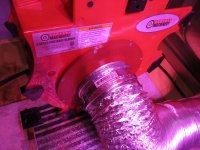
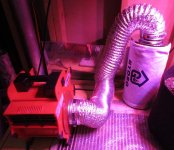
I 3D printed a flange to fit my 3 speed Harbor Freight blower. I already had it, but it actually seems like a better deal than most fans if you can get it on sale or coupon. It even has an optional heater you can add to the exhaust for cold areas like my basement. So it can filter and heat with one unit. I used standard dryer hose from Lowes. It's working awesome! No more complaints from my wife. Product links below. Warning: this is a modification of a device that is engineered for another purpose. Any persons modifying it in this manner assumes all liability. The author of this post in no way condones the modification by others, nor accepts any liability.

https://www.harborfreight.com/3-spee...wer-61729.html

https://www.harborfreight.com/heater...wer-93272.html

https://www.amazon.com/gp/product/B0...?ie=UTF8&psc=1
 

Attachments
  • photo95508.jpg
    photo95508.jpg
    219.4 KB · Views: 0
  • photo95509.jpg
    photo95509.jpg
    194.8 KB · Views: 0
Last edited:
Ok. But you are increasing the resistance causing the motor on the blower to work harder and draw in more amperage. Just be caureful with these types of modifications.
 
Ok. But you are increasing the resistance causing the motor on the blower to work harder and draw in more amperage. Just be caureful with these types of modifications.

Thanks for the comment. That holds true for any type of blower, including the ones marketed for the cannabis industry. I can do some full restriction amperage testing if you'd like, but I think the difference in draw would be negligible especially on the lower two speeds. I do this type of stuff for a living BTW.

These blowers have been successfully used in DIY laser cutters to filter the smoke for many years with no issues. That is what I originally purchased mine for. That is an much more industrial environment than this obviously.
 
Yes, it’s not a large spike in amperage. I agree. But if the motor is being forced to work harder than normal... it will shorten the useful lifespan of the blower. What I would be most concerned about is burning up the motor, or the wiring, by bringing in an amperage higher than what it was intentionally designed for.
 
Like I mentioned, these have been used for filtering smoke from laser cutters for years with the same filter and same size ducting, up to and including full restriction from smoke plugged filters. I appreciate your concern for my safety, but this is pretty low on the list. I own a machine shop that manufactures rocket motors and related parts including machining and full plating services.
 
Plasma cutters? I was the mechanical engineer for a state contractor machine shop for many years. Mostly hydropower.
 
Not plasma cutters, however building one of those is on my list. Laser cutters utilize a Co2 laser inside an enclosure that is designed to house the harmful radiation and smoke. A lot of smoke is generated, and some users vent to outside if they have enough property, but quite a few have to filter it because of close neighbors. Similar to what most growers have to deal with. Obviously a laser cutter will generate much more particulates than a typical cannabis grow, so the filter will need changed out more frequently. Most people with Co2 lasers will run the filter until it's totally plugged (fully restricted flow) , so that's how I know that it will be fine for filtering weed smell and not burn the motor out. I'm not even sure that the squirrel cage fan experiences increased motor drag and resulting amperage draw, rather just friction and flow separation losses due to its design. If anybody is really interested in the details of this type of fan, here's a link that gives the basics: https://en.wikipedia.org/wiki/Centrifugal_fan
 
The motor is designed for a specific airflow rate. If it was not designed to bear additional load (like from the resistance of the filter and ducting) you will be shortening the useful lifespan. That might not be a big deal, just be aware that’s all.
Yes, I have loads of experience using smoke eaters. Specifically for welding, but same purpose.
I don’t have much experience using laser cutters. Torch cutting, plasma cutting, and water jets is what I am more used to.
 
Ok, so I just did some testing and research on this centrifugal style of fan due to the concerns of Toker1, including talking to some experts. When the intake is blocked, the amperage draw goes down, the RPM goes up, and the electricity use goes way down. Because the fan cage is no longer loaded with air, it has very low drag and the load goes way down. So it actually does the opposite of what Toker1 is claiming. I just tested it with a piece of cardboard and an ammeter, and it does exactly that.

To address the motor intake air and potential heating of the windings, the motor air intake is on the opposite side and is unaffected by air flowing through the squirrel cage fan. This is what makes these motors perfect for furnaces, (says my experts). Because when people don't change their furnace filters, the load on the motor lessens because the squirrel cage fan has less air to move, and the motor doesn't overheat, it actually runs cooler with lower electricity use. So it's very safe.

In fact, when the filter is cleanest, that's when the motor loading is highest. Ironically enough. So if there are any other armchair experts that want to chime in, fight me, lol.
 
How could RPM go up and amperage go down? If that was the case, why would normal operation be at a higher amperage? Something isn’t quite adding up there with this information.
How every motor in the world works is rated amp drawl will operate the motor at the rated rpm. If rpm goes down, the motor brings in more amperage trying to increase the speed. That’s how a motor gets burned.
Back to amps going down, if amps decrease there is less electric potential to push the motor and speed Will therefore
decrease.
Ok...if we are talking separate air flows, the. Yes I see the pint being made.
 
Last edited:
Thanks, but We already established there was 2 separate airflows. So as I stated previously, this seems to be designed to handle the load of the extra resistance on the intake of the blower. That was my only concern with the modification suggested.
 
You are just not getting it. It is simple physics. If there is less air available to move, there is less resistance on the fan, not more. When you block the air on either the intake or exhaust, the fan has less work to do, therefore it will speed up and the load is reduced which directly relates to amperage draw. There are literally tons of engineering links to learn about these principals for those interested in the subject. Here are two of them:
https://www.youtube.com/watch?v=qX-GodOlUuU&ab_channel=grayfurnaceman
https://cr4.globalspec.com/thread/108775/Squirrel-Cage-Blower-Speeds-Up-When-Airflow-is-Blocked
 
It's a blower, so the manual is gonna say that. It doesn't change physics. It's ok to be wrong, you don't have to keep this going. I actually have the device here and am telling you what my testing proved, as well as links to experts on the subject. It's up to you to learn, the same as I had to do to determine what I was doing was safe when you said it wasn't.
 
Last edited:
Correct MJTECH. There is less resistance when airflow is blocked. They have less work to do.
 
Last edited:
The interesting thing is that this thread actually forced me to learn something new. Like when my shopvac hose gets plugged and the motor starts screaming really fast, it's not because it's under more load, it's under less. I've always believed the opposite and thought it was going to burn the motor up. Probably just harder on the bearings to run at the higher RPM, but if it's engineered correctly the bearing rating will be higher than the maximum motor RPM.
 
"Try this:

Put an ammeter on the power to a vacuum cleaner.

Watch the amps drop when you restrict the flow.

No theory required to understand this.Simply accept it."
 
Oh no... you assume too much. I got that. Didn’t you read my comments about the separate air flows? If you are not resisting the motor itself, then the fan is designed to work under higher loads. Got it. That was my only concern.
If you knew this the entire time, then why didn’t you just say that in the beginning? My guess is you really didn’t research these issues until I started questioning your modifications. Really need to consider these things when you go against the manufacturers recommendations found directly in the user manual before you go recommending to everyone online. You could be taking on a liability you didn’t mean to take on, or worse off leading someone into a dangerous situation. It’s good to have these types of discussions. Especially when safety could potentially be compromised
 
If you are saying you take full responsibility and any liability that may come with your design changes (that go against the manufacturer’s recommendation), then ok. Until I see that in writing, I will continue to question the designer to ensure they know what exactly they have done. The fact that it took us this long to describe the separate airflow, that is independent of the motor leads me to believe this potential issue was never even considered prior to recommending it to the public. That’s a dangerous way to go about recommending something. If you did your due diligence then why didn’t you say that first comment? I’m glad you are doing the proper research now, a bit late IMO.
 
Back
Top