
GrowWeedEasy.com
You are using an out of date browser. It may not display this or other websites correctly.
You should upgrade or use an alternative browser.
You should upgrade or use an alternative browser.
curing weed
- Thread starter tex
- Start date

WolfMansBrother
Member
It's useful to see inside the container. Especially if you have humidity tags.


Gingerbeard
New member
I always thought clear jars were just so people could admire their weed and glass is a little easier to swipe out the kief.

Rootsruler
New member
When curing everyone always says to use glass mason jars. Why can't it be in a stainless steel airtight container ?
Doesn't have to be jars. You can use whatever air tight container. Actually, glass is probably not the best because THC degrades with light. If you don't keep your jars in a dark place it could degrade the potency.
Check out Grove bags. They will maintain your herb at the proper humidity and will cure your weed as good as jars.
I still use glass jars but moreso out of habit than anything else. I have a cool dark place for them to reside.

Smokesteve
New member
Some really good growers use paper bags so there are tons of options.
Rootsruler
New member
Why do laboratory technicians use glass beakers, glass test tubes, glass everything and not SS?
Same reason we use glass. Its pure and doesn't contaminate the contents, stainless steel does, big time.
Can you explain how SS contaminates weed?
Why glass? Because it's easier to sterilize, stands up to more classes of chemicals and is generally cheaper than SS.

Bluey
Well-known member
Can you explain how SS contaminates weed?
Why glass? Because it's.....
No I can't.
Ask a metallurgist.
A bit of googling shows
"Stainless steel is a typical contact material used during the manufacturing, shipping, and storage process for biologic products. Stainless steel commonly used in biopharmaceutical applications is of the grade 316L and is an alloy containing mainly iron, nickel, chromium with minor amounts of manganese and vanadium. Stainless steel is a major source for metal leachables, especially if the surface of the equipment or tank is not properly treated. The main leachable components are iron, chromium and nickel. Several fold higher levels of metals such as iron and nickel have been shown to leach into a liquid formulation after storage at room temperature in unpassivated compared to passivated stainless steel vessels [12]."
Last edited:
Rootsruler
New member
So as long as the metal is passivated it won't leach?
Rootsruler
New member
Interesting. So does this pertain to food? If this is as toxic as you make it out to be why does NSF approve SS as food safe?


kingfish
Well-known member
Why do laboratory technicians use glass beakers, glass test tubes, glass everything and not SS?
Same reason we use glass. Its pure and doesn't contaminate the contents, stainless steel does, big time.
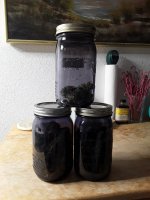
These are the type of jars I use.​
Attachments
Rootsruler
New member
Might wanna leave some space inside the jars for air.