
GrowWeedEasy.com
You are using an out of date browser. It may not display this or other websites correctly.
You should upgrade or use an alternative browser.
You should upgrade or use an alternative browser.
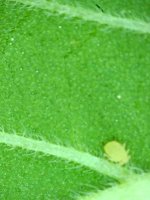
Aphids!! Help
- Thread starter Fjeff
- Start date

Bowhunterwoody
Well-known member
I've used spinosad with great results on peppers. I'd only use it in veg on the girls.

AGH
New member
My honeysuckle, and others in the neighborhood, had a HUGE aphid infestation as well.
To answer your question, first a question of my own...while you are away, do you have someone tending to your garden? If so, show them how to spray with insecticidal soap, neem oil (as long as you're not in flowering stage), and how/when to dust the top of the soil with diatomaceous earth. Below is a post I made on a previous thread about pest management, although the OP was referring to mites. Pretty much any pest will be dealt with similarly. If you don't have anyone tending to your garden, it's likely that you'll come back home to nothing but aphids as they are very tenacious and reproduce like crazy!
Good luck and keep us posted with what you decide to do!
To answer your question, first a question of my own...while you are away, do you have someone tending to your garden? If so, show them how to spray with insecticidal soap, neem oil (as long as you're not in flowering stage), and how/when to dust the top of the soil with diatomaceous earth. Below is a post I made on a previous thread about pest management, although the OP was referring to mites. Pretty much any pest will be dealt with similarly. If you don't have anyone tending to your garden, it's likely that you'll come back home to nothing but aphids as they are very tenacious and reproduce like crazy!
Good luck and keep us posted with what you decide to do!
​Such a great question! Here are a few things that I do and it's different based on if you already have pests or not. It's also important to remember that it's integrated pest management not eradication.
Just a note - this is for organic living soil. Synthetic grows have different options available in addition to these since in synthetic grows there really is not much of a soil biome to consider so you can use more aggressive treatments.
Before Pests
- The most important piece, the very foundation of pest management, is managing your environment. Evolution is amazing in that it balances out the needs and vulnerabilities of different species. It just so happens that the ideal environment for cannabis is the opposite of the ideal environment for the things that can harm it. Thanks, evolution! So make sure that your temps, humidity, watering regime (too wet soil invites TONS of different pathogens), make sure you're exchanging fresh air with good ventilation and that you're moving air around (good for the plants, but also helps keep those flying pests from flying as well)
- I learned the hard way that when I cook soil, I dust it with some Diatomaceous Earth. This keeps anything that may hatch that was in the soil from doing any damage since as soon as they start crawling around, they are doomed with Diatomaceous Earth.
- Some people mix their soil with Neem cake. I've never done this and have mixed feelings about Neem. There are very good arguments on both sides. My thoughts are it probably doesn't affect taste and it's probably very good at preventing pests, but as long as I can get by without it, I will.
After Pests
- ​First rule: keep on treating for several weeks after you have seen your last pest. It's easy to let your guard down and breath a sigh of relief once you no longer see any activity. However, you don't just need to think about the current living pests, but also the eggs and larvae that are in the soil or on the plants. If you stop now, you'll be back to square one in just a few days. This is where it's important to understand the lifecycle of pests.
- Use a combination of pest control. This helps to make sure that pests don't develop a resistance to any particular method. It also helps because different control techniques work in different ways.
- I have used insecticidal soap with great success against fungus gnats. This removes the protective waxy coating on pests and kills them. It also will interrupt eggs from hatching and will kill larvae. This is a contact control solution, so it only is effective if it gets on the pests. Make sure to spray the leaves, top and bottom, as well as the surface of the soil since pests often hang out there and some eggs can be eradicated as well.
- When I had mites, I used Neem oil in addition to the insecticidal soap. Neem works in several ways in that it disrupts the reproductive cycle of the pests causing population collapse. It has also been shown to enter the actual plant which ends up in any pests that munch on the leaves. Again, be cautious with this and usage recommendations range from not using it at all during flowering to not using it closer than 2 weeks before harvest. Do your due diligence when deciding when/how to use Neem oil.
When I had mites, this was my technique:
- Water (had to adjust because the soil was too wet) properly.
- After watering, I would use insecticidal soap on the soil surface as well as tops and bottoms of leaves.
- Once the top layer of the soil dried enough, I would dust on Diatomaceous earth
- When it was time, I'd water again and repeat the process except I'd use Neem oil
- And so on
- This was in addition to getting a handle on my environmental conditions mentioned above.
Hope this helps!

Fjeff
Well-known member
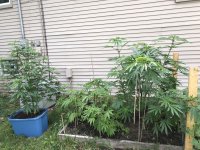
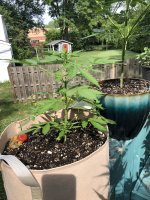
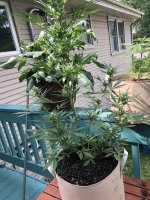
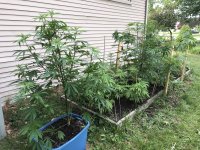
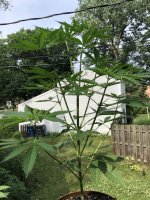
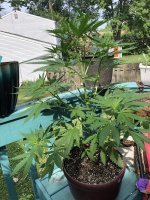
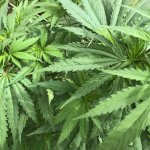
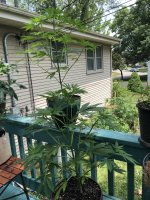
So I am back from vacation. Before I left I took a small paint brush and very meticulously went through all of the plants and brushed every little critter I could find. YES it took a very long time. Then I sprayed with a soap solution. On my return things appear to be under control, not perfect, but under control. I also found some helpers, ladybugs and mantis, lots of them. I was very excited for the help. It’s been a long time since I’ve seen a mantis.
Attachments

Smallgrow
Well-known member
Good news , under control is ok place to be .
I had a bad infestation in flower two years ago. I controlled with high pressure water(garden hose on jet, not pressure washer), and just blasted them off. It kept them under control.
Then to my surprise the ones that made it to harvest all fell off onto the floor dead during the hang dry stage I just swept them up. I didn’t find a single one when I broke up and smoked the buds. I also never found a single one in my house or on my houseplants. I was worried about bringing them in with the harvest.
Hope you can keep them at bay
I had a bad infestation in flower two years ago. I controlled with high pressure water(garden hose on jet, not pressure washer), and just blasted them off. It kept them under control.
Then to my surprise the ones that made it to harvest all fell off onto the floor dead during the hang dry stage I just swept them up. I didn’t find a single one when I broke up and smoked the buds. I also never found a single one in my house or on my houseplants. I was worried about bringing them in with the harvest.
Hope you can keep them at bay