What's new
GrowWeedEasy.com
You're browsing as a guest. Sign up to join the conversation, share your grows, and get help from thousands of fellow growers — it's free and takes less than a minute.

What is your biggest question about growing cannabis?

Growing our plants has some things in common with flying an airplane. I can go over every fine detail of how to fly the plane. I can tell you exactly what to do when this happens and that happens. I can educate you on every detail of becoming a pilot. That does not mean that you can now fly the plane without crashing. You need experience before you will have a smooth flight form takeoff to landing.

That being said, what does a first time grower need, in order to have the best chance for a seed to harvest successful grow?

I'd guess the most important elements of a successful grow are...
  • Strong, direct light (whether it's from the sun or a grow light) - this directly powers the growth of buds. With weak light you'll have small yields and airy buds that lack potency
  • Good root environment (air and water) - At it's most basic, the roots need constant access to both air and water for the best results. There's different ways to provide this environment. You can even grow with your roots hanging in the air with water being misted on them! (here's a picture). You can use soil or coco coir, or even grow your roots directly in water (with bubbles being made in the water to provide a source of oxygen). When it comes to picking a grow medium for cannabis, if you want the fastest growth you want to choose something that maximizes the water and air to your roots. That's why growers add things like perlite to their soil/coco, to make air pockets in the soil, or why they grow in fabric pots (lets air in from the sides). The less air the roots get, the slower the plant tends to grow. So when you have plants growing in relatively thick soil like pure composted soil without any perlite, the plants tend to grow slower than they would in an airy soil mix or hydro. That's always why plants that are overwatered/droopy grow slower - the plant isn't getting oxygen at the roots.
  • Comfortable Temperature - Plants can't stand freezing or incredibly hot temperatures (though some strains are bred for cold climates, while some from hot regions can handle the heat)
  • Nutrients - If you're growing in heavily amended soil, you may not need to add nutrients since they'll be there in the soil. However, once a plant is in a pot for a while, it uses up a lot of the nutrients. Generally if you're growing your plant in a container and you're not going to add extra nutrients, it's recommended to transplant your plants to fresh soil periodically during it's life, and especially right before flowering, to make sure your plant is getting what it needs. However, for the fastest growth you can give nutrients to your plants directly in the water. This gives it the right ratios in the most easily absorbable form, so you don't have to worry about running out. You don't even need supplements to get really high quality bud. Base nutrients is all you need to get to harvest with amazing results. The main thing about nutrients is your plants need lots of Nitrogen (N) in the vegetative stage (any all-purpose plant nutrients will do the trick) and then it needs high levels of Phosphorus (P) and Potassium (K) in the flowering stage (Flowering Nutrients, Cactus Nutrients or Bloom Boosters provide lots of P and K).
  • Seeds/Clones - Obviously you need a cannabis plant :)
When it comes down to it, that's all you really need to grow successfully. If you get an auto-flowering strain you don't even need a timer or to worry about light schedules. Just plant the seed and wait until harvest.

I personally feel like growing in something like coco coir under a small HID light like a 250W MH/HPS or 315 LEC is one of the best ways to ensure good results the first grow if you're just looking to grow 4-7 ounces.

The reason is that those lights are incredibly efficient and easy to understand how to use. With fluorescents like CFLs and T5s, the yields are relatively low for the electricity used, and with LEDs it can be really tough to get the light distance "dialed in." It just adds a lot of variables that make it easy to burn your plants. I like how with the small HID lights you just keep the light about a foot away from the tops of your plants and forget about it, yet you still get those really dense and potent HID buds because of the light intensity. The small HID lights also don't put out a whole lot of heat, so you don't usually need to worry about an exhaust system unless you're growing in a very small space without ventilation. A 250W HPS puts out about the same total amount of total heat as an LED that pulls 250W of electricity out of the wall.

Coco coir offers a great root environment with beautiful water-holding and drainage ability, so you get above average vegetative growth rates. Any hydro or coco nutrients made for cannabis will do a great job. Growing with coco coir will also teach you about pH and overall get you really familiar with the cannabis plant's nutrient needs. By the end of a coco coir and small HID grow, you'll have learned 80% of what you need to know about growing in either soil or hydro if you choose to do that down the road. You'll also have a good base knowledge if you wanted to move onto bigger grows!

So what does a grower need? A grower needs to make a good environment for their plants with decent temperatures, bright light, and happy roots. Even if you don't do anything else, you'll be able to make it to harvest with really high quality bud if you just do those things :)

The last incredibly important thing is to always dry your buds slowly and cure them after harvest! A lot of growers skip those steps, but they are necessary to get buds with the best smell, smoothness and potency. If you just smoke buds directly off the plant it will taste horrible, give you a headache, hurt your throat and possibly not even really be potent! The dry/cure will dramatically increase the overall quality and appearance of your buds!
 
The "light sensors" for photoperiodism are actually photorecepters that are located in the plant tissue. The receptor is called "phytochrome." As you know, the plant needs to get 12 hours of darkness each day to start flowering. In experiments with photoperiod plants, if even one leaf gets light at night, the plant doesn't start flowering, because of the phytochromes located in every leaf :)

However, when stipules are used to protect the future bud sites in other species of plants, it's very common for them to fall soon after the bud starts forming. So your observation that they tend to dry up after buds form lends more evidence to the original theory that they might offer some amount of protection.

Though like Green75 said, they may just be mostly vestigial now, like an appendix :)
 
Tell me the secret of growing rock hard nuggets.

Three things :)
  • Light - and a lot of it! This may be the most important part. Your buds need direct exposure to bright light or they won't grow. However on the flip side, too much light will burn your buds so more is better, but only up to a point!
  • Strain - choose a high-yielding, dense strain. Some strains, like many Sativas and Hazes, will never grow dense buds no matter what you do! Trying to get dense buds with the wrong strain can be a lesson in futility.
  • Dry/Cure - Buds tighten up during the dry/cure process (plus it makes them smell better, smoke better and feel more potent!)
It will also help improve density if you trained the plant in the vegetative stage to grow just a few big buds at the top, as opposed to many smaller ones located throughout the plant.

Other than that, I think the main focus is keeping plants healthy and keeping the temperature down in the flowering stage (very high temps can cause loose buds and burn away potency/smell). Give plenty of light but avoid light burn. Not really related to adding density, but if you have dense buds you NEED to make sure you keep the humidity under 50% RH to prevent the chance of bud rot :)
 
Ohh yea I see. It has to do with seasons and the changes are called equinoxes and solstices. The change in hours happens within a week. So you plan ahead to have two or three (depending on your summer) months of vegg starting around the first solstice (longest day of the year) and then when the season changes you start counting weeks from the equinox ( equal hours of day and night). By this day flowering signs start to appear. What it would be week 2 after an abrupt switch. But officially it's the equinox
 
when people say their lighting schedule is 24/7 do they mean 24/0 or do they mean 24on/7off on an ongoing cycle?

That's a good question! When people say 24/7 they just mean 24/0. It's not a special light schedule. They're just using that saying about "24/7" meaning "all the time" :)

also, the conventional wisdom on a plant being "safely" female has always confused me. since a plant can herm at any time, isn't it the case that a plant is never safely female? i don't mean to be nitpicky but it's something i feel like i've been not understanding from jump.

Yes, it's true that a plant that appears female at first may end up being a hermie. However, the tendency to herm is caused by a plant's genes. The idea is that if you use good genetics, every plant should be either fully male or fully female. In the breeding world, one of the most important aspects of breeding is that you should always throw away a natural hermie, and NEVER breed with it, because you can't create sinsemilla (buds without seeds) any time you have plants growing both male and female flowers. So with a good breeder, all your seeds will be just one gender because the tendency to herm has been bred out.

So I think most people assume that if they started with seeds from a trustworthy breeder, that if the plant appears female at first that it will continue to be female. The seeds you need to watch out for the most are seeds you find in your bud that isn't supposed to have seeds. If the bud has seeds it means that either a male plant was in the grow room, or a hermie was. Most growers know to remove males, so there's a strong chance that bag seeds were pollinated by a hermie. If you grow bag seeds and every one appears to be a female, you can pretty safely assume that a female plant pollinated another female plant, which means that these seeds have the tendency to herm in their genes. So it doesn't definitely mean they'll herm themselves, but it adds evidence that they might since at least one of their parents did.

But like you said, even if you believe a plant is "safely" female, it still may herm naturally or especially in response to stress. In fact, almost any female cannabis plant will put out some pollen sacs or bananas if you stress it enough in the flowering stage, or if you let it go on for several weeks beyond when it should be harvested. It's an emergency response by the plant to make seeds in a really bad situation, known as rhodelization.

But good seeds should never herm in regular conditions, because they have been bred not to :)
 
What is the best safe extract method? By best I mean highest quality/quantity😀😀😀

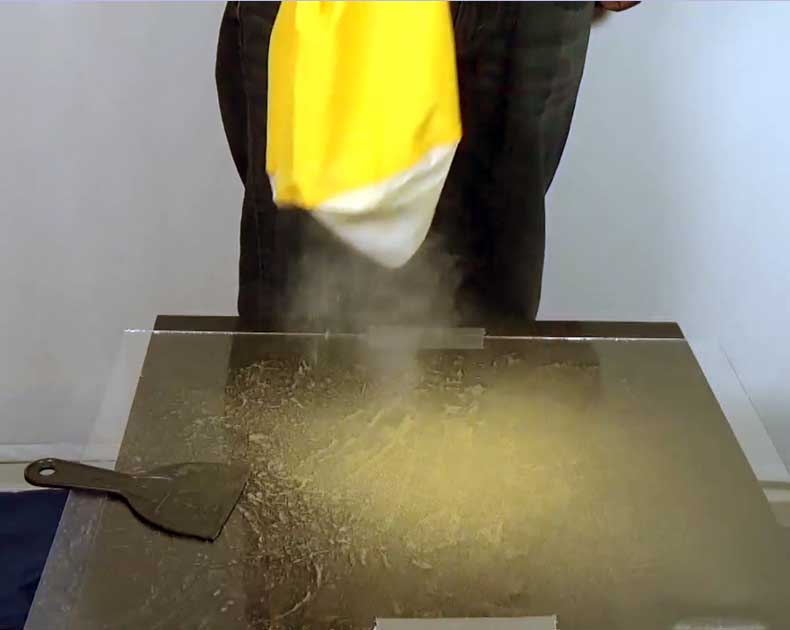
I personally think dry ice hash is the best extraction method, and I'll tell you why.
  • It's cheap and safe - all you need are bubble bags and a few pounds of dry ice (find a local source here)
  • Best yields - probably the best yields of any home extraction method.
  • It's easy - you put the cannabis and dry ice together into a bag, and just shake it. The hash falls right out the bottom.


However, the downside is that if you want to get the biggest yields from this, you will end up with some green matter in your final result. I personally like having a little green in there, because it adds extra smell/taste to the hash, and I think it makes the potency and effects more complex. However, some people consider green-tinted hash as less "pure". if you want to get the really, really pure hash that comes out golden, you can do it with dry ice hash by using the finest mesh bag from the Bubble Bag kit, but you'll end up with lower overall yields.

I've tried making bubble hash/ice water hash, and although the quality of the result was good, I got much lower yields than with the dry ice method. I also didn't like how you have to dry the hash afterwards. One time I lost a whole gram of ice water hash to mold because I didn't realize it wasn't completely dry when I packed it away :( With dry ice hash your product is immediately ready to use, or you can press it if you want a solid block, but you never need to worry about mold.

I'm too afraid to make hash using chemicals and solvents, but here's the ones I know of:
  • BHO (Butane Hash Oil). Not only is it dangerous to make, I also read a study about how a private group tested the BHO up and down the California coast and in Denver, Colorado. They found that 99% of the BHO samples they tested had significant amounts of butane left, and some had dangerous levels. I wasn't surprised because BHO often has a chemical taste to me. Since I read that I've never smoked BHO again!
  • CO2 extractions seems to be much healthier for you, so it's good to buy at the store, but it needs really expensive equipment so it's not a good choice for home.
  • The other main "class" of solvent hashes that I know of are the alcohol based ones like QWISO (Quick-Wash ISOpropyl) or RSO (Rick Simpson oil). In these cases you basically soak cannabis in alcohol, since the THC and other cannabinoids will bind to the alcohol, then strain away all the inert plant matter. So you are left with an alcohol-hash mix. Then you evaporate the alcohol, and what's left is hash. However, with the alcohol methods, the resulting hash usually isn't all that great for smoking.
Lastly, one of my favorite ways to "extract" is to make edibles, like butter or canna caps, for when you need cannabis on the go :)
 
Would it be more correct to start counting the beginning of the flowering cycle when the first preflowers appear instead of when we flip the light schedule to 12/12?
When growing outdoors how do people know when flowering starts? Preflowers right?

Outdoors, growers count from when they first see flowers forming. The hard part is deciding when that is. A plant will start showing pre-flowers when it's 3-6 weeks from seed, even if it's still in the vegetative stage, so you can't just count from the time when preflowers appear. You have to count after the buds start forming, after you've got more than a few pistils per joint.

I think indoor growers tend to count from 12/12 because it is an exact date, as opposed to when it "seems" like the plant is flowering. I think it helps give people more precise comparisons. If I'm growing White Rhino strain, for example, it's more precise to say "9 weeks from 12/12" than "~7 weeks from when you first start seeing flowers." Trying to judge the beginning of the flowering stage is a lot more subjective than an exact day count.

I have noticed that breeders tend to give flowering times that are about 2 weeks too short for most strains. Breeders say it is because they're counting from the beginning of flowering, as opposed to the flip to 12/12. That may be part of it, but I personally think they choose to do it that way because seeds sell better if they are listed with a shorter flowering stage! I used to work in retail, and it reminds me vanity sizing. Vanity sizing is the idea that if I'm a Size 10 but I find a pair of jeans that fit me but the tag says Size 8, statistically I'm a lot more likely to buy the pants because it says that I'm smaller, even though my actual size is unchanged. In the same way I feel like breeders tend to estimate that their plants will be ready to harvest sooner than they actually will be, because everyone wants to get to harvest as soon as possible!
 
Like 9fingerleafs said, it depends a lot on the location. Flowering time estimates in weeks aren't as helpful outdoors. That's why when you're researching a strain that's specifically designed for outdoors, they'll almost always give you an estimated harvest month in addition to an estimated flowering time. For example if you read the description of Power Africa x MK Ultra FAST, it says it has a 6-7 week flowering stage, but it also tells you that if growing outdoors to expect it to be ready to harvest in September. However, that's still just an estimate. The further away you are from the equator, the sooner your days get short and the sooner your plants tend to be ready to harvest. Plants growing closer to the equator tend to take longer than the estimates because the days are longer.
 
I`m going to be cheeky here as I have 2......1) how to further lower the percentage lost due to moisture evaporation, conversion during drying/ curing....I use the system recommended on this site in one of the tutorials and reckon I `ve got it down to the low 73% ish mark but it does irk to lose 3/4`s of your weight

Unfortunately our plants are made up of about 80-90% water. Just like how humans are mostly made of water. There's no way to be able to lose the water and still keep the water weight. If you want to dry your buds out enough to be able to cure and smoke them, unfortunately you need to accept they'll lose 70-80% of their weight after drying. Because of that, I never weigh my buds until after they've dried! If you want to reduce the difference between the "wet weight" and the "dry weight" you could stop watering your plants for a few days before harvest, but ultimately that doesn't increase your final yield at all, and if anything you want to slow down the drying process in most cases, as opposed to speed it up by reducing the water levels ahead of time.

2) Is it advantageous to alternate between bacterial and fungal teas when watering organically in soil instead of just one or other depending on where you are in the grow? Thank you :)

Hmmm, that's something I'm not an expert on, so definitely take anything I saw with a grain of salt! I hope one of the organic growers might chime in! However, I don't see any problem with alternating just off the top of my head. It seems like that's a good way to make sure you soil gets a good amount of both :) Fungi and bacteria work together in the soil, so I don't think it would hurt to give them together, either. If in doubt, it's always a good idea to contact the company that made the supplements. They will be experts on how to use their products for the best results. I've found that every nutrient company I've ever contacted has gotten back to me within a few days if I email them from the website :)
 
Is there some form of reference schedule or table or guide as to what levels of ppms or EC are optimal for each stage of growth? Preferably week-by-week. And also recommending/estimating both the EC/ppms going in to the plant and the EC/ppms going out of the plant.
I'm asking as a soil grower, but others might prefer knowing specifically for hydroponics.

It seems the topics of plant nutes and feeding is a lot more complex than most of us beginners understand, and it's not simply a matter of mixing nutes and adding them in every week. It's a delicate matter i've been led to believe.
 
When you remove the leaves to 'bones' just before switch to 12/12, do you preserve the tiny growth tips at each node, or remove all but the last few near the tip?
 
Thanks for the answer Nebula, I'm pretty sure I harvested my sour diesel a week too early for that reason, won't happen again
 
This is what puzzles me most, is all the nutrient companies have a "basic" nutrient line and then they have all the "extra" stuff they want you to give the plant to make big better buds. You can read in forums that growers think the extra stuff rocks and other say that it sucks. The companies all claim theirs is the best. I have not see a study that say bigger buds are more potent or even healthier. I wonder if it is like when you compare an organic grown apple to a non-organic apple. The Non-organic one is bigger and shiner but the taste and texture (the important things) do not compare to the organic one. Are all the "extra" really better or would the plant be happier without them?

Oooh, this is a great question! So here's the thing. You need base nutrients, and that's it. You can get all the way to harvest with the most amazing and top-quality buds ever, with even the cheapest base nutrients and nothing else.

However, obviously it's more complicated than just that.

One thing I'll say, and when you talk to growers who have tried a lot of different nutrient lines, you'll often hear this: Your environment has a MUCH bigger effect on your final results than the specific nutrient system or supplements. When I've tried different nutrients brands, I've had a really difficult time telling the difference. A lot of growers will tell you the same thing.

The biggest difference I've noticed has been between nutrients that use mineral sources of nutrients vs organic sources. I feel like in my experience, the mineral nutrients tend to get slightly faster vegetative growth and increased potency, while the organic nutrients tend to produce buds with a stronger/more complex smell. But the difference is relatively small and you can definitely still get really smelly buds with mineral nutrients, and you can get really potent buds with organic nutrients!

Besides nutrients, there are some supplements that have a well-established use:
  • Root supplement - something that protects your roots like Hydroguard is really important if growing in hydroponics to prevent your roots from being attacked by root rot. But if your plants aren't being attacked by root rot, it doesn't really make much difference
  • Cal-Mag supplement - if you're growing in coco coir, or if using very soft water like reverse osmosis or distilled water, you'll need to add extra Cal-Mag to prevent Calcium and Magnesium deficiencies. However, if your plant doesn't need Cal-Mag, it won't make much difference.
  • Silica supplement - Silica is often found abundantly in water, but if you don't have a lot of silica in your water, your plant's cell walls aren't as strong. As a result, if your plant is low on silica, it has weaker stems and is more susceptible to heat stress. However, like the others, adding silica when you don't need it doesn't make a difference
  • PK Boosters & Shooting Powders - These add high levels of P & K. If you're not giving your plants specially made flowering nutrients, they need another source of extra P and K. So for example if someone is growing in soil without adding nutrients, a PK booster is perfect for the flowering stage to make up for what the plant has used up in the soil.
So the main theme is that, when it comes to supplements, the ones that make the biggest difference have specific uses for the plant. If the plant doesn't need it, adding a supplement can sometimes do nothing, or even worse it could hurt your plant. For example if you add a PK booster when you're already giving full strength base flowering nutrients, you could burn or even kill your plants!

Then you've got supplements that don't necessarily "fix" a problem, but "enhance."
  • Sugar and Carbohydrate based supplements - These claim to increase potency, and appear to increase bulk. However, I'm not 100% certain they add anything but sugar to the bulk, because if a grower uses a lot of these types of supplements the plant can start oozing sugar sap. If you taste the sap, it's sweet and not potent at all. So I almost wonder if that extra "weight" is just sugar being stored in the buds and doesn't necessarily add to the potency.
  • Other Enhancers - Then there are the more nebulous types of supplements which are meant to give overall improvements. For example supplements with Amino Acids, Vitamins and other non-essential plant compounds. These are a lot harder to measure the results. I'm sure some of them do what they say, while others are basically snake oil. It's a lot harder to prove one way of the other with these, because it's difficult to test unless you do a big side-by-side controlled experiment with a bunch of plants. And unfortunately, the industry just hasn't quite reached that point yet!
When it comes to bud quality, it's important to give the right nutrients so that your plant is healthy and vibrant, but other than that I think focusing on the environment (specifically light levels and the temperature and humidity during late flower and the dry/cure) have a much bigger effect on your final bud quality than your specific brand of nutrients or the specific supplements you use!
 
Flockshot That's a great question! I personally take off all the growth tips except the top few on each main cola right before the switch to 12/12, but then I don't remove any more after that unless I'm specifically trying to clear away a cola. Under a relatively small light like a 250W HPS, I'll leave the top 3-4 nodes. Under a 600W HPS I may leave a few more since the light can penetrate down further (and I want to end up with very long colas if possible) :)
 
Back
Top