What's new
GrowWeedEasy.com
You're browsing as a guest. Sign up to join the conversation, share your grows, and get help from thousands of fellow growers — it's free and takes less than a minute.

New Grow room Lights

oldjarhead100

New member
some of you know I will be building a new grow room . I plan on enough room so I can work around the plants and was going to use a light mover to move my 1000w hps back and forth with Leds to fill in the full spectrum has anyone used a light mover before. Or would it be better to use more lights.(not what I want to do .my electric was 500 last month) any Ideas would be appreciated Thanks
 
If you are wanting to increase yeild, you will have to invest in a light system that outputs more light flux energy.
Iv seen all sorts of setups that try to make more efficient use of a particular light source, but ultimately the only thing thats improved is the efficent use of space. One example is verticle grow setups. They yeild about the same or less as typical setups, but they make much more efficient use of the available space.
I have also seen really well done rotation grow systems that rotate plants around a verticle light source.

https://forum.grasscity.com/threads/rotating-plants-method.1161985/

The problem is that the light source is the limiting factor, no matter if you increase the surface area exposed, the amount of energy leaving the source will be the same that reaches the plant. You really only distribute the energy in a more even fashion, however i can see some negative qualitys to this also.

If you want to try increase your yeild with the same power demands, you will want to look into plant training. Utilizing the available light as efficiently as possible by controlling your canopy and plant structure. The most efficient system there is, is likely sea of green. The more plants you have, the shorter your veg time.

;)
 
Hey oldJarhead watch grow boss videos on light Movers very informative and the guys is a riot. You can effectively double your yield with a light mover and that 1000 watt HPS for just a few dollars more per month I think you will like it.
 
I have seen no evidence or theory that suggests increased yeild. Take a 10x10 SOG canopy, with a 600w light covering 1/4 at any one time. No matter the speed or duration of the coverage, the amount of light received by each of the plants, would be the same if the light covered the entire canopy at once. Its the conservation of energy. Its always the same.

I have read of so many that have taken the plunge, only to regret it.

https://www.thcfarmer.com/community/threads/1-year-with-light-mover-what-a-waste-of.13204/
 
I like my two 600 hps lights as they cover a larger space and elec isn't bad. Lec's look great if your in it for the long run. 2 sents
 
Well if you like to Ed Rosenthal, a widely respected scientific type of person, Ph.D, etc... on cannabis he says two 600-HPS lights will yield more than a 1000-watt HPS in the Grower's Handbook. While I do agree your light source is your limiting factor I bought a top LED and so did a friend of mine... in fact his is suppose to be more powerful than mine, but side by side they appear equal for the amounts of intense lighting they put out. I went out and bought Orca for the walls, he put up Mylar... I had better temp control and I had better yields and not one single issue with hot spots on the leaves or anything else. Overall I still look back and would invest in it because it more than paid for itself in a single grow.
 
LED manufacturers use incorrect testing parameters and incorrect advertising. They are severely inconsistent compared to eachother and a lot of products offer no efficiency benefits over traditional HPS.
They advertise the spectrum, comparing it to the incorrect chlorophyll disolved in solvent charts. Completely ignoring the Mcree curve. Whats highly amusing is with a video by kind LED in which they detail the mccree curve but then completely contradict it with a chrolophyll solvent chart.

Mccree Curve

Chlorophyll Solvent Chart

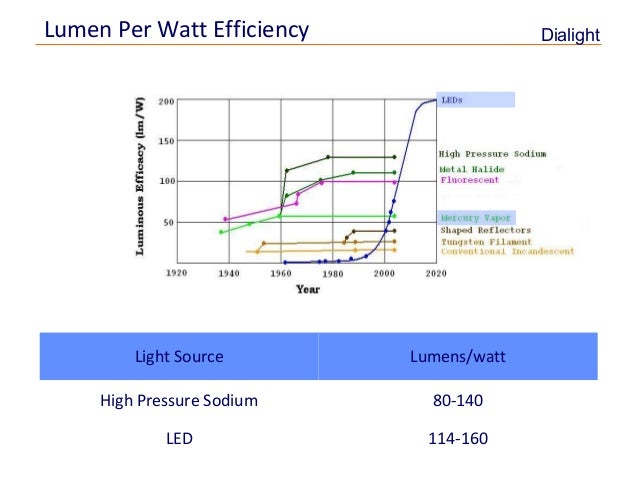
LED efficiency is not stagnant, their efficiency has been developing over the years, this is called the haitz's law. Its only of the last decade that LED technology has really seen its place as the dominent light source due to lower cost and efficiency.
led-lighting-vs-hps-all-you-need-to-know-4-638.jpg


Green LED's have had poor efficiency compared to RED/BLUE. The reason behind not using green in LED grow lights is not because of plant absorption sensitivity, but because its less productive using a lower efficient spectrum LED.
Recently green LED's have now caught up, allowing its use in grow lights. Spectrum king is one of the first to adopt this and has full spectrum LED products. Knowing full well about the plants spectrum sensitivity, providing highly efficient and field tested yeild per watt.
 
Two 600w HPS is more efficient because the 600w chemistry is more efficient than the 1000w chemistry. So watt for watt, 600w is better.
Whats interesting is that monster garden did a test on a new 1000w bulb chemistry from genesis, set to be released this year. It showed an almost 1:1 efficiency compared to 600w chemistry. However i have not heard of anything since the anouncement.
 
Thanks so much all for the information. My intention was to have room to work on the plants where they are and not have to drag them out to trim or tie up or down ect. so the room would be about 8 to 10 feet long and about 6 wide . I know that 2 600 w hps lights are better than 1 1000 w light .I didn't know that when I started. and to incorporate some co2 into the grow .
 
Thats a decent size, i do have to add that if total light coverage is limited because of hang height, a rail system will improve yeilds from increasing plant count. If the ceiling is high enough for the light to cover the intended area, that would be just as effective, less complex.

Good luck ;)
 
With the changes to lighting today, honestly it is so hard to even try to keep up half of the time, CMH is suppose to be even better yet, and then I've heard of others as well... I just sit back most of the time and have to wait to see what else comes out this month, and try to keep up on all of the latest new advancements coming out. I've watched a bit of Monster Gardens myself they really take the time to test produces and try to put it out there for others. At the end of the day I know when it comes to LED, and even the subject of cannabis we are learning so much more everyday at this point.

I still have professional books that clearly state "a plant does not use green light" and yet I've been reading this past year how that assumption was wrong, plants do use green light on a small enough band, but it's enough that if a green light was left on during the dark of flower it could cause issues. Even the light period is now being broken up into three sets 6-hours on, 2-hours off (ONLY DURING VEG - NOT FLOWER)... to boost yields by how the plant is best able to use the most light. So I am glad I'm not the only person out there trying to keep up with all these changes, as the cannabis industry starts to really take off.
 
Its all marketing, the people who know best, know. CMH never offered anything except extended spectrum (UV B), but its efficiency is not as good as HPS. Not even close. Its a niche market.

Plant biology textbooks are not exactly wrong, they just dont elaborate on the subject enough regarding chlorophylls. The issue is no theory however, several studies show the plant absorption characteristic, mccree did this with several high terrestrial plants in 1981. Followed by recent studies explaining why plants appear green to people.

Heres a absortion profile of a cannabis plant (jack herer).

tdKIr_d.webp


The absorption sensitivity is pretty much flat up until 700nm, with a slight hump at 550nm (green).
The reason plants are green to us is because of the combination of our eyes sensitivity curve (bell curve) and the "slight" favouring of green reflection from plants.

Plants photoperiodism is not effected from green light because photorecepters that modulate or signal a plants circardian rythem does not operate at those frequencies of light. I did a 2 week research on photoperiods and plants, what effects they have. How they respond, benefits etc. I solved the mystery for myself, finding a article that reviewed all the current studys on continious light. A big portion is related to a plants circardian rythem.
 
Well since you seem to have a firm understanding of lighting spectrums and the colors, I've got a reasonable question for you based off from something else I was reading which perhaps you can help me and others better sort out. The information I am about to state I know from both personal experience, as well as now I have it written in an article which better explains a few aspects of it better than I can at this moment in time. Here is where I found the article, they did ask for my email address to get to it, and then showed me the article afterwards.
https://thegreensunshineco.com/fix-...m=facebook&utm_campaign=top_grow_light_expert

Now in there they are talking at one point for those running purple grow light LED's to turn on both the Veg & Bloom switches in Veg, once the plant is strong enough to take the extra lighting; same thing Mark the owner of Platinum LED told me when I was looking at buying lights. I was impressed enough with them being under the Veg LED setting, but when I turned on both when they were big and strong enough... WOW it really caused them to take off in growth. I never argued, questioned it or anything else because I was just so happy to see growth I could eyeball and measure everyday.

Later in Bloom I had an issue without enough light penetration when the plants got to a certain height, so I grabbed a HO, T-5 with a 6400K bulb and I added it to help with the bottom half of the plant to make sure it covered from the tips to the base and left no leaves without lighting. Again the plants took off even faster yet, so I assumed it was because of more leaves getting even more light still. When the T-5 needed to be pulled out, I grabbed this LED construction flood light which was around, so bright you face it the wall opposite of you to blanket the room in so much blue light you'll need to wear shades to work in a white room in the middle of the night. In Veg it did wonders to help the plants, but in Flower the buds which were over 1/2 way through Bloom, suddenly reversed and turned back the lower half of the plants to Veg in 24-48 hours even after I saw what was happening and pulled the Blue LED light out of there.

A person I know swears they have the best results with HPS/LED combination together, and who am I to argue what I can't explain? So then I found that article which seems to actually explain all of the above in a short couple minutes of reading... and you seem to clearly know a lot more about lighting and color spectrums than I currently do and so I was wondering if you would be able to confirm if that article really is spot on and confirm this is the best way of supplementing LED lighting for even better grows and yields. Thank You for your time.

Oh and here is another link from that same company explaining in much greater detail what you did about the colors of the lighting too.
https://thegreensunshineco.com/7-myths-led-grow-light-companies-tell-you/
 
Last edited:
Whenever you add more lighting, yeild and growth will typically improve. Getting increased growth rates from turning on both veg and bloom lights is no surprise. What is surprising is if LED manufacturers are recommending to only use the blue spectrum during veg. Many LED grow lights are full spectrum which allows you to use them, unchanged, for the entire grow. A plant using only blue spectrum during veg will be significantly held back on its full potential.

The provided article talks about the effects of light spectrum on plant growth. But its highly underdetailed and uncited for my taste.

Plants use all wavelengths of light from blue (400nm) to red (700nm). This is defined as PAR, the wavelength range that plants use for photosynthesis. Outside this range, energy in the form of photons go relatively unused. When it comes to the efficiency of photosynthesis, there are two main aspects that affect the overall outcome. These are the light absorbance and action spectra. In order for photosynthesis to occur, light is needed to drive importent chemical processes (light reaction, calvin cycle). Pigments inside chloroplasts, absorb photons that come in proximity to them. The ability to absorb specific wavelengths of light is determined by the characteristics of these pigments. This can be measured with what is known as the absorbance spectrum.

Absorbance spectrum of cannabis

The absorbance spectrum only details what and how much light is absorbed, but does not describe how efficiently the energy is used for photosynthesis. This can be measured with what is known as the action spectrum

Mccree Curve

The mccree curve describes the quantum yeild over PAR. Quantum yield is the efficiency with which light is converted into fixed carbon.

Now, why this is important, is because all light in the photosynthetic active radiation spectrum, is important. However plants will respond to a certain light recipe better than another. As it happens, blue light is less efficient than red light. So having red not only in bloom but in veg is importent. Its also worth noting wavelengths between blue and red are more efficient than blue as well (green). So a full spectrum is always beneficial. This is why HPS and MH does so well and still gives LED good competition. They are in no way leaving us yet.

Now theres probably another aspect thats importent to understand with lights and plants. That is photomorphogenesis.

Photomorphogenesis describes the biological responses light spectrums have on plants. One of the more well known plant-light reactions is the effect from blue light on plant growth.
Plants have evolved in nature to respond to spectrums of light in order to adapt in enviroments that would otherwise not be possible without some knowledge of its surroundings. Phototropism is one ability a plant uses to search for light, leaning or growing towards light to ensure their energy source is within reach.
Whats interesting is that these abilitys to sense light are seperate functions from the light absorbing pigments responsible for photosynthesis drive.
These sensors are called photorecepters. Photorecepters drive a plants physiology to adapt to enviromental conditions.

Blue light has been shown to inhibit elongation or stretching, creating less wasted growth and tighter and thicker nodes. The photorecepter responsible for blue light reactions, is called cryptochrome.
Recent studys have shown the different effects of light wavelengths has on plant growth.

downloadfile.png


It was found that only a small amount of blue light is needed to prevent the exagerated effects of growth. It does not matter what kind of light spectrum balance is provided, as long as some amount of blue is provided, to prevent the negative effects of vegetative growth.
Another importent photomorphogenesis ability, is photoperiodism. Photoperiodism is the ability of a plant to recognise seasons and time. Phytochromes are responsible for sensing Pr (Red) Pfr (Far red) wavelengths, with this they can judge the length of days and seasons and respond biologically. One main aspect used from this data is to judge the timing of flowering. Plants measure the length of the dark phase to determine when its ready to start its reproductive cycle. Long day plants require short dark cycles to initiate and short day plants require long dark cycles. This all comes about from the photorecepters measuring light and operating its circardian oscillator with respect to these.

I apologize for possibly a excessive answer, however i find i cannot just provide a direct answer without background reasoning to back up my response.
When it comes to lighting, you only really need a little bit of blue, more blue is not wasteful. It is just perhaps more efficient and more natural to provide energy in other wavelengths. This is why MH is such a well balanced veg light. Myself i find the best growth is found from blue enhanced HPS. You get higher electrical and quantum yeild efficiency and the added benefit from blue on plant morphology.

Regarding with sidelighting, its a very beneficial technique. Using extra blue lighting is probably less beneficial compared to just regular broad spectrum color temperatures. As said, only a little bit of blue is needed. Lights do not effect the photoperiodic cycle on flowering, if you had a issue of revegging mid flower. I would seriously believe that there was light interuption during the dark cycle. Just the shortest or smallest light exposure can change the phytochrome ratio (Pr to PFr ratio) to disactivate the flowering process.

Hope that helps ;)
 
Well let me first start off by saying Thank You, I sincerely do appreciate your long answers and explaining it all to me, I keep copying what you say so I can stop and plug it into a search bar to learn even more yet. I clearly don't have the deep education you do on this subject, but I assure you that only means I have to take even more notes and keep studying up to learn it myself, because I refuse to go through life having to learn as little as I need to about everything. On that note you have inspired me to buy some more books on plant biology and such, perhaps a book on how lighting interacts and affects plants, know of any good books?

The painful lesson I did learn in my plants revegging on the lower half during flower, simply proved that for whatever reasoning that light spectrum of that LED construction light promotes Veg, and not okay for Flower. I know for a fact the lights turned off, I have a sensor which tells me when the lights are On/Off right on the environmental control. I know the room for them is 100% dark, and I know the room gets properly sealed or I would have blown through CO2 at a noticeable rate. The only thing I did to cause it to happen for that week was add the contruction light, and it only affected the lower 1/2 of the plants where that light was able to get to do to the thick foliage. When I saw what was happening, I pulled the light out of there after checking things carefully over that week to make sure I wasn't overlooking something else, but since both it and the LED's are on one timer together I was able to rule out it not shutting off on time, I also checked the light sensor. I looked at the Day/Night temps (electronically recorded) to make sure it wasn't being caused by excessive heat perhaps from the heat generated by the light, since the light couldn't rise, perhaps then heat was trapped, I even looked at the thermometers placed throughout. I could find no issues of it being heat, it wasn't a CO2 issue, and so on... I even let it go from having good sized buds to it had nothing for buds of any kind in just a week's time, I've never revegged a plant so fast in my life.

At the end of the plant's cycle, having believed I learned what I did from this, I did put the light back in there to accelerate the revegging process, which should be easy enough, you just turn the lights on 24-7 and let the plants go. But in trying to do it with the construction light again it killed 1/2 of the plant from what appeared to be just too much stress of pushing for such a fast chemical change within them in such a short period of time. I don't like to leave things like this "unknown"... At the end of the day I want to understand why this light caused the plants to react in this fashion, I want to learn as much from it as to why so I can then learn as much as I can about "now how do I use this to my advantage moving forward?"

Again thank you so much for your informative posts, what I wouldn't give to sit down with you sometime and just learn everything I can from you about plants,
 
No worries at all, a good place to start would be plant biology by stern, bidlack, janskey.

A good book on plant senses is, what a plant knows by daniel chamovitz.

Also light measurement handbook by alex ryder.

If you make it through those, the following book will pretty much complete your understanding.

Plant physiology by taiz.

After that, you pretty much have to rely on researching papers and articles. The asnwer to your question, is related to photorecepters. Specifically phytochrome. Phytochrome is responsible for the photoperiodic actions within a plant.

Plant phytochrome

Several studies over the years have shown the phytochrome action on flowering, with opposite effects on short and long day plants. Using far red and red light, you can change the ratio of Pr and Pfr photorecepters. Using light spectrums such as far red and red, can manipulate the levels enough to physiologically impact a plant. Such as inducing flower more quickly. So much infact that, using a light flash technique, you can increase a plants light cycle to 14/10 and still keep a plant in flower.

http://www.growweedeasy.com/phytochrome-manipulation-cannabis

Dark without light also changes the ratio, with Pr increasing and Pfr breaking down and turning into Pr. This is why more darkness induces flowering.
This is also why possibly having a long dark phase, before flowering, speeds up the flowering process.
Using red in short day plants could probably slow down the flowering process, but it can not prevent it. Also if you were wondering if you could use far red spectrum to induce flowering on its own, its a clear no.
Phytochromes dont absorb blue, but cryptochromes do. This is why i do not believe that your blue light was at all related to your revegging. Are you sure the plant actually revegged ?. You wernt in the flowering stretch stage possibly ?.
In any case i will look into the effects of blue on phytochromes and see if i come up with anything.

Another Phytochrome article

EDIT:
Here is a article detailing blue light effects on plants.

http://www.gpnmag.com/article/effects-of-blue-light-on-plants/

Cryptochromes have a hand in relationship on the flowering process, for short day plants at high enough intensitys (over 20um), they slow down the flowering process.
Perhaps what you witnessed was the blue light slowing down the flowering process at the lower canopy, compared to the top.
With revegging, it takes at least 2-4 weeks to return a plant back to veg (have experienced this), then another 2 weeks to start flowering again. If this was the case, you would have had at least an added month to your grow. If you still completed the flowering stage within the typical time <12 weeks, i think the plant did not actually reveg.
 
Last edited:
I actually had to edit my previous post a few times to correctly provide accurate information, i was typing and shopping at the same time. As of the time of this post, it is correct.
 
Note: Google had to correct me to find the book:

Plant Biology by Stern, Bidlack, Jansky (You misspelled the last person's name)

Correct me here if I am wrong, but I couldn't find this book per say, but I did find it online in PDF (64-pages long):
Light Measurement Handbook by Alex Ryder:
http://www.cs.ucsb.edu/~mturk/imaging/Misc/ILT-Light-Measurement-Handbook.pdf

Okay I want to double check on a possible typo you may have said:
"So much infact that, using a light flash technique, you can increase a plants light cycle to 14/12 and still keep a plant in flower"

I am familiar with the Red and Far Red light being used on plants going back over the years, and I am also familiar with Ed Rosenthal's work where he point blank pointed out plants really don't need 12/12 lighting during flower, because if that was actually the case Northern Climate species of plants would not flower until December, but all the crops have to be out by late October because they get snow by then and freezing temps. He even went on to explain how in his early work along with another stated 12/12 lighting which people more or less set into stone as the "standard" from that point forward.

Based off from that knowledge I have always used longer lighting periods of 14/10 during flower, and I do know for a fact that the 60-day flowering cycle has been increased because of it, yes I have noticed increased bud production and growth for the longer period of lighting, but I equally noticed that unless I decrease down to 12/12 or even 10/14 lighting to push for the harvest to finish it can take around 90-days, not the standard 60-days we expect from those same strains. On that note I have been asked if someone could push a longer than 24-hour lighting period such as you suggested as 14/12... or even something longer... but that is where I honestly didn't have any information to answer that question, thus I am very interested if that was a typo or if you really meant to say a 26-hour plant day, instead of a 24-hour day.

On the topic of "revegging... believe me when I say point blank clearly... I would happy show you again if I had the extra plants to spare at the moment to do it because I would love for you and others to try to explain it because I certainly can't. I understand 100% clearly what it is like to deal with newbie growers who think they saw something clearly and honestly just don't have a clue, even when you sit and repeatedly try to explain it to them to understand. I can only assure you I am not a moron, I do have a clue, and I without a doubt know what beautiful very plump buds look like as cola's which I was manicuring and taking very good care of. I also know what it means to see cola's completely disappear, not dry up and die, not fall off, get eaten or some other explainable reasoning, but to literally watch in horror as those lower cola's reverted and disappeared to the point of looking like I turned back the clock. Even when I went to show some others, I had to show the time stamps to prove I didn't just screw up the order of the photos saved at the time of the issues because it was 100% new to me, I'd never seen anything like it before. Like a plump tomato the size of a softball one day, turning around and reversing itself to the point it gets smaller and smaller down to a marble and then a peas size and then doesn't even exist all in a single week's time and no explanation behind how or what the happened... I've been gardening for 40+ years now, and in all my time, experience and knowledge, I can only tell you what I saw and know to be 100% true.

At a future point when I can get back on track again, I will repeat this and I will give you a crack at trying to explain it as you will get to sit and see what I see day by day, a couple of times a day I'll even take photos of it... because I don't have any answers to it, nobody else did at the time and I'd love the chance to maybe end up being the person who turned on some scientific person's interest like Ed Rosenthal into doing further studies to try to explain what happened and why it happens. So yeah I'm looking forward to repeating this for you and will keep a grow journal of it. I'd love to do it right now, but since my brain injury I pretty much lost everything I had growing and am now just trying to get things started all over again. But if you'd like to repeat the experiment for yourself. Here is the light's information:

Made by:
Smart Electrician

Sold by:
Menards.com

Rated for 15-Watts, it has 5-LED's... and it doesn't tell me much else other than it was made 11 / 2012... I did try to find a model number on it, but none of the labels seemed to help me find its model number, its lumen, etc... I did go to Menards.com and try to look it up by comparing what my light looks like to help you, but again they have clearly changed the LED design, if you want I will take a photo of mine off as well as on to try to put whatever into perspective... I've even been thinking in the future I should get a meter or borrow one if possible to do a spectral analysis and also see how many PAR it puts out. All the same it won't really matter because as we both know... at the end of the day "Seeing is believing".

When it comes to the dark cycle I again go with 100% darkness... not the LED light of the clock time, not the red light of a powerstrip glowing in the darkness... NO LIGHT AT ALL!!! How does a person correctly establish its 100% darkness... sit in there for 10-15 minutes with your eyes closed and wait... then open your eyes in the darkness and scan every corner, every bit of everything with the lights all on outside of it and carefully looking to make sure there wasn't even a pinhole of light getting inside of the enclosure. The walls and everything were solid, not like a grow tent someone forgot to zip up all the way one day, when the door gets closed it gets secured and locked for the CO2 enrichment. If the lights are off, I won't go inside even with a green light for any length of time... whatever it is can wait until the lights come back on or unless I'm waiting for the lights to go off to spray and leave within a few minutes after.

Some people see pests as a part of growing, and even allow for leaves and debri to be left on the floors of their growing area... I again take everything 100% seriously, I grow from seed to harvest 100% pesticide and fungicide free, IF the floor gets water on it from the hydro system, I clean it up... if the walls get dirty I wash it off right away... I do not tolerate pests, any outside air which would ever need to be exchanged for the air inside is filtered through a carbon HEPA filter. So I know it wasn't some fungus or mold like Bud Rot that dissolved and ate the buds, it wasn't some pest I was allowing to survive in there, and it wasn't caused by a light leak, or anything else which could explain and account for it. I also know it only took 1-week's time to happen, and at the end of 7days I pulled the lighting in hopes of stopping the process, but it was too late, the plant's lower half revegged... and I know this to be a fact despite knowing what you are saying about revegging taking much longer to be 100% true. Thus why I thought I was actually onto something to help me shorten the revegging time, and when I tried it i killed 1/2 of the plants.

 
Last edited:
Yes it was a typo, it was ment to be 14/10. Just like in the article i referenced it with, discussing about the light protocol (I realised that i had provided the wrong link Correct Link Here).
Outdoor plants traditionally flower at around 14/10, as mine usually do when i do outdoor (I do both in and out). Sometimes the odd one will flower later with 13/11. The whole idea of 12/12 is to allow enough room for this variability. Although you could get away with 14/10 with most strains, it always pays to be safe.
The far red light technique, allows you to send a message to the plant, to tell it to shift its circaridan clock straight away. Typically it takes a couple of hours for this process to occur naturally. This allows the plant to shift its physiological balance to "sleep" phase. Gaining you two additional hours. As you have worked out by yourself, there is no real gain in increasing the light schedule. As the flowering time is increased, countering any benefits. But applying this technique, allows you to take advantage of the added hours and does not take any longer to ripen.

I quite enjoyed your description on your experience with growing and the issue at hand, i did not doubt your experience. However when you are dealing with a phenomenon that cannot be explained by "current" understanding. One must rule out variables before making conclusions, thats the whole idea on releasing papers to the public. To allow people to asses the experiments and protocols used and rule out errors that may have been blindly made (not that inexperience has anything to do with that, we are human, we make mistakes).
But i do look forward to anything further you come up with, but i still feel there has to be some variable that cause this phenomenon. Or something i have missed in my research. But i really feel this cannot be. Plants fall under a category of Short day, Long day or neutral day plants. Its obvious what the SDP and LDP require to flower, but neutral day plants can vary on their ability to flower. Temperature, age, humidity etc. Can all be triggers to enable flowering in these plants. However with SDP or LDP, they cannot flower without the phytochrome balance. I have seen no study under these day dependent plants that show flowering triggered by another variable. It makes it even harder to believe when there has been so many studys on photoperiodism, experimenting all different types of variables to show any exploits or phenomenons that would void this rule.

I wonder were you using 14/10 light schedule ? And i also wonder if there was some sort of disease or deformity that disfigured the plants natural processes from running normally. Anycase its been interesting. Its these types of discussions that test my knowledge and pushes me to study more to have a more rigid understanding.
 
Last edited:
I have a theory and i am pretty confident on it. If you were indeed using 14/10 as the light cycle, as i had said. For most strains this would be ok, but some still require more darkness to flower. 14/10 is really the crossover point between a plant deciding to veg and or flower. With a particular strain, the plant may decide to flower but then get confused and start vegging again. I believe this is what happend with you. This was possibly exacerbated with the blue light. Blue light has been shown to slow down the the conversion of Pfr to Pr, however less so compared to red light.
 
Back
Top